
Rockport
Where River Life Comes Into Focus
Set on the St. Lawrence in the heart of the 1000 Islands, Rockport is a village shaped by the river and by the long history of movement that came with it. Boats arrived here before cars did. Supplies changed hands here. River people knew these channels intimately, and visitors learned to slow down long enough to take in the view. That history still lingers in the village today, not only in its harbour and shoreline, but in the way Rockport rises and dips along the water, opening toward islands, docks, and one of the most atmospheric stretches of the St. Lawrence in the Riverlands. Widely known as the Heart of the 1000 Islands, Rockport became an important stop for sailing vessels and steamships long before it developed its reputation as a summer destination.
What draws people here today is easy to understand. Rockport is a departure point for river cruises, a place of marinas and waterfront dining, and a village where the line between working harbour and visitor experience still feels intact. It is lively in summer, but not flashy. You come for the river, of course, but also for the way the village keeps its history close: in the hills, in the churches, in the surviving buildings, and in the sense that Rockport still belongs to the water first.
Highlights
-
Known as the Heart of the 1000 Islands and situated within the Frontenac Arch Biosphere, with a setting that places visitors directly within one of the St. Lawrence’s most iconic landscapes.
-
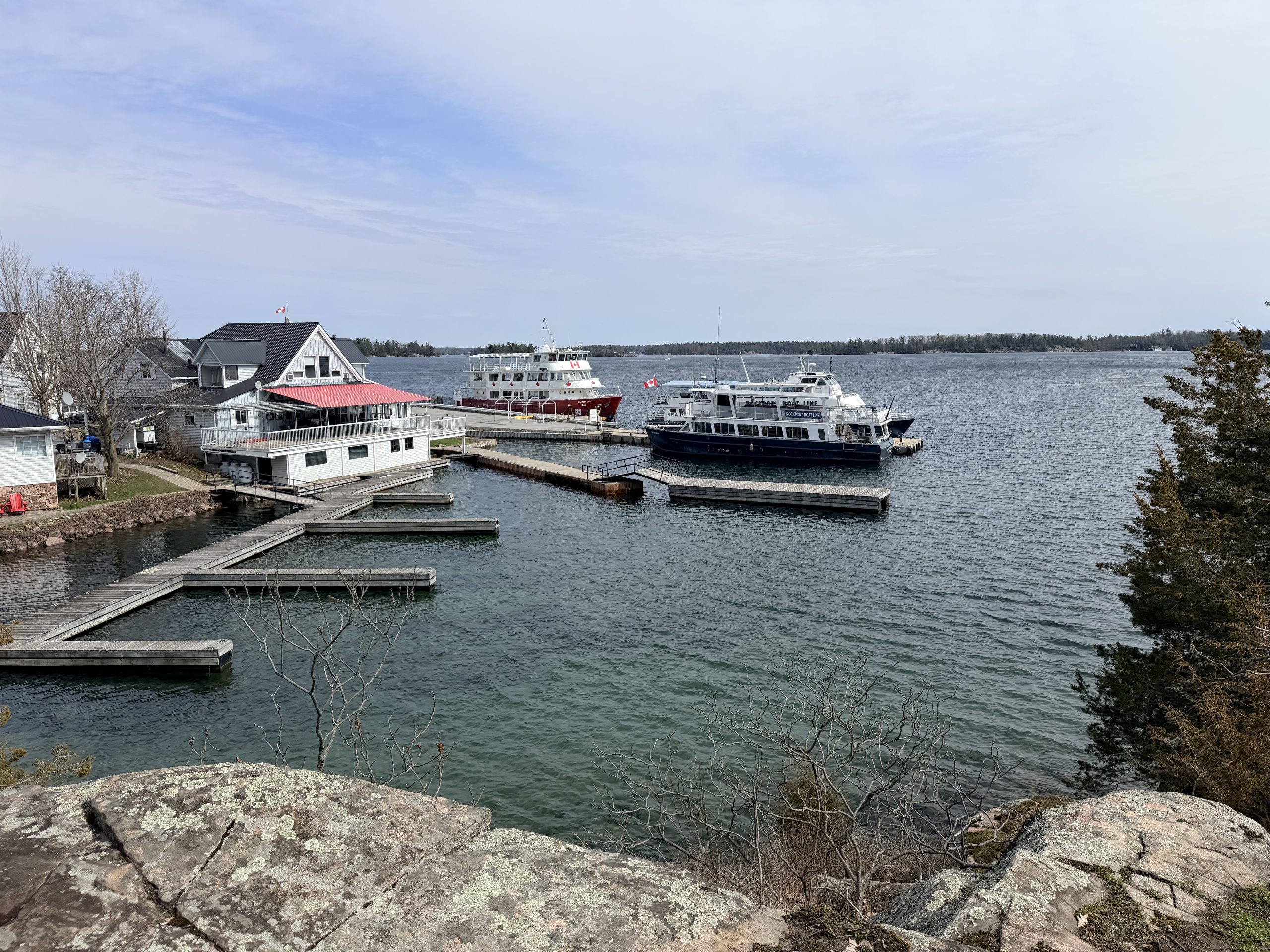
River cruises through the 1000 Islands depart from Rockport, making the village one of the region’s classic gateways to the St. Lawrence.
-
A signed heritage walking route that connects the village’s waterfront, hillside streets, churches, homes, and historic sites.
-
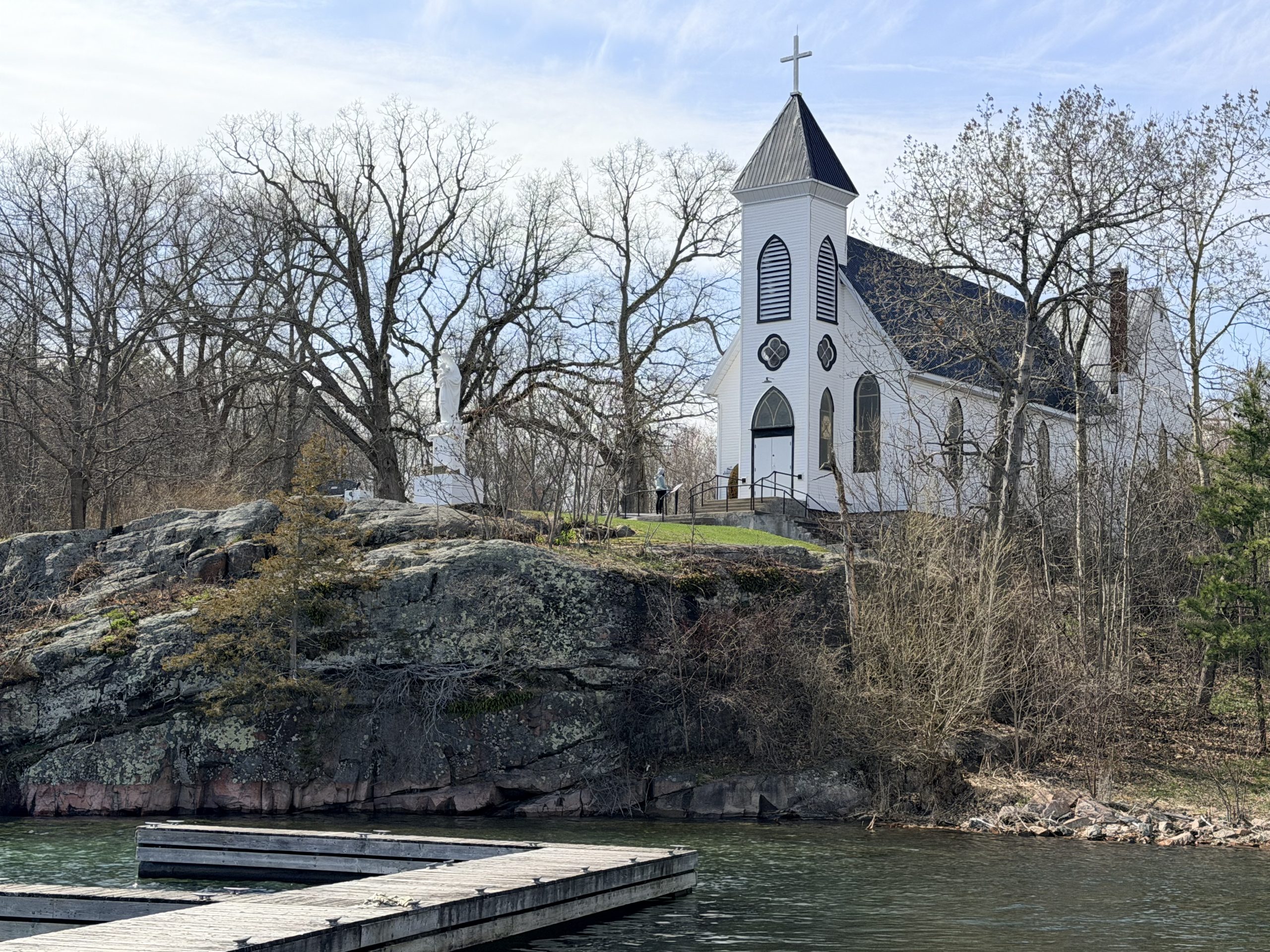
St. Brendan’s Catholic Church overlooking the village sits on the hillside above the harbour and is named for the patron saint of seafaring people. It hosts an annual Blessing of the Boats each June.
-
Cornwall’s Pub on Front Street, where Rockport’s local energy still feels intact alongside the waterfront.
-
Rockport Winter Carnival, a longstanding community event that keeps village life visible beyond the summer season.
Why Rockport stands out
Some villages in the Riverlands are best understood through their main street. Rockport is best understood from the waterline. Even before you board a boat, the village tells you what kind of place this is. The harbour is not decorative. It is the reason Rockport exists. The shoreline, the marinas, the slips, the boat sheds, the river views between buildings, all of it points back to a long relationship with navigation, craftsmanship, and passage.
That is what makes Rockport feel different from other communities along the river. Unlike places whose identities leaned more fully into summer resort life, Rockport never entirely let go of its working river character. It is not simply a scenic stop in the 1000 Islands. It remains a real village, one where locals still come to catch up on community news as naturally as visitors arrive for the river. You do not just look out at the islands here. You leave from here, move through them, and begin to understand why this stretch of the St. Lawrence became one of Ontario’s defining summer landscapes.
History & Heritage
Rockport’s story is inseparable from the St. Lawrence. It was a working river village first, defined by movement, trade, craftsmanship, and the practical demands of life on the water. Over time, it also developed a summer life of its own, but leisure never fully replaced the village’s deeper identity as a place of service, exchange, and everyday harbour activity. That layered history still lingers in Rockport’s form: in its harbour, in the buildings that remain, and in the way the shoreline still feels connected to work as much as beauty.
One of the clearest expressions of that identity is Andress Boat Works. More than a point of interest, it helps explain Rockport itself. Boatbuilding was part of the village’s working life, and that legacy gives Rockport a sense of authenticity that goes beyond its scenery. It reminds visitors that this was a place built around repair, skill, marine work, and a deep familiarity with the river.
But Rockport’s story is not only industrial. The points that shape its walking routes reveal a village layered with faith, memory, and everyday life. The Church of the Redeemer and St. Brendan’s Catholic Church speak to the spiritual and community life that took root here. St. Brendan’s, which hosts an annual outdoor Blessing of the Boats each June, keeps that relationship to river life visibly present. Places such as Cornwall’s Store and Home, the Rockport Cheese Factory site, Hickory Lodge, and the Customs Building suggest a settlement that evolved over time, balancing commerce, hospitality, and river traffic within a compact footprint.
That combination is what makes Rockport more interesting than a simple cruise stop. It is a village where working waterfront history, summer life, and community memory still overlap. Walk it slowly and the story begins to appear not as one landmark, but as a series of connected traces.
What a visit looks like
A visit to Rockport should begin on foot. The walking routes through the village are part of what makes this place feel distinct. Rather than arriving only to board a boat, visitors can move through hillside streets, past churches, houses, interpretive stops, and harbour views that gradually reveal the village’s character. It is a place that rewards looking closely.
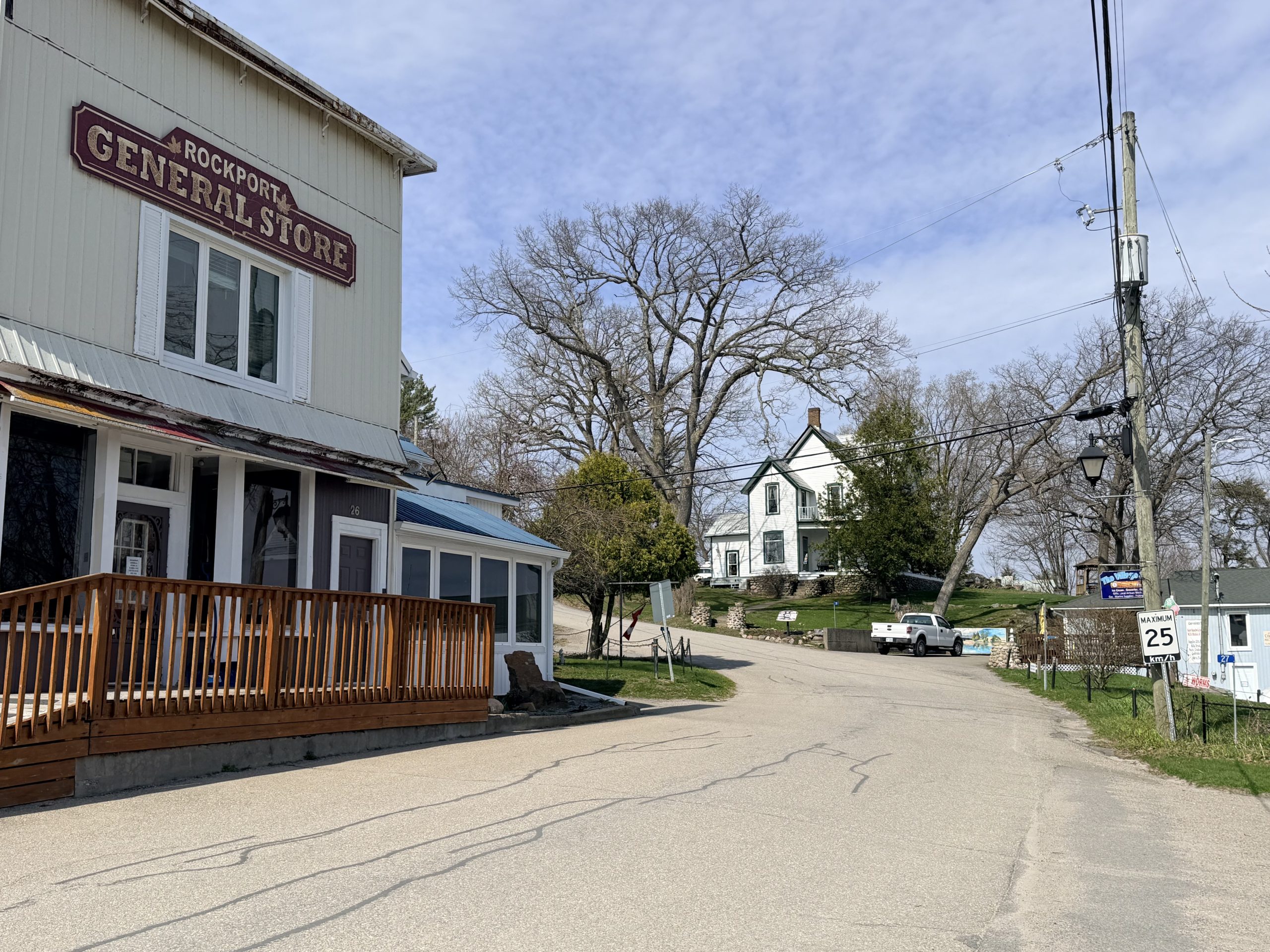
From there, the waterfront naturally takes over. Front Street, Cornwall’s Point, the docks, and the marinas keep the river in constant view, and the village feels inseparable from that presence at every turn. Even Cornwall’s Pub feels part of that continuity, keeping its local energy rather than conforming entirely to the expectations of tourism. Rockport General Store adds to that same village rhythm, offering a place to stop for gifts and necessities. Rockport also sits along the 1000 Islands Parkway trail, part of the Great Lakes Waterfront Trail, making it an easy stop for cyclists moving through this stretch of the St. Lawrence. Travellers exploring this stretch of the St. Lawrence could also pair Rockport with a stop at Landons Bay Lookout for a higher vantage point over the islands. You may choose to take a cruise, linger over a meal near the water, or simply watch the movement of boats through the harbour. The point is not to rush through Rockport, but to let the village unfold in layers.
That is what makes a visit here satisfying. Rockport offers the immediacy of the 1000 Islands landscape, but it also gives visitors something more grounded: a sense of how people once lived with this river, worked on it, worshipped beside it, and gradually built a village that still feels connected to all of those histories.
How Rockport fits into a broader Riverlands stay
Rockport works well from a few different base towns. Gananoque, Brockville, and Maitland all suit travellers who want to stay close to the St. Lawrence or build a broader Riverlands stay with time along the river.
Rockport also makes an easy outing that can be combined with time in Mallorytown, Lyndhurst, or Maitland, depending on whether the day leans more toward the waterfront, village heritage, or a mix of both. It is one of the places that helps explain why the St. Lawrence side of the Riverlands deserves time beyond the headline attractions.
Why Rockport Lingers
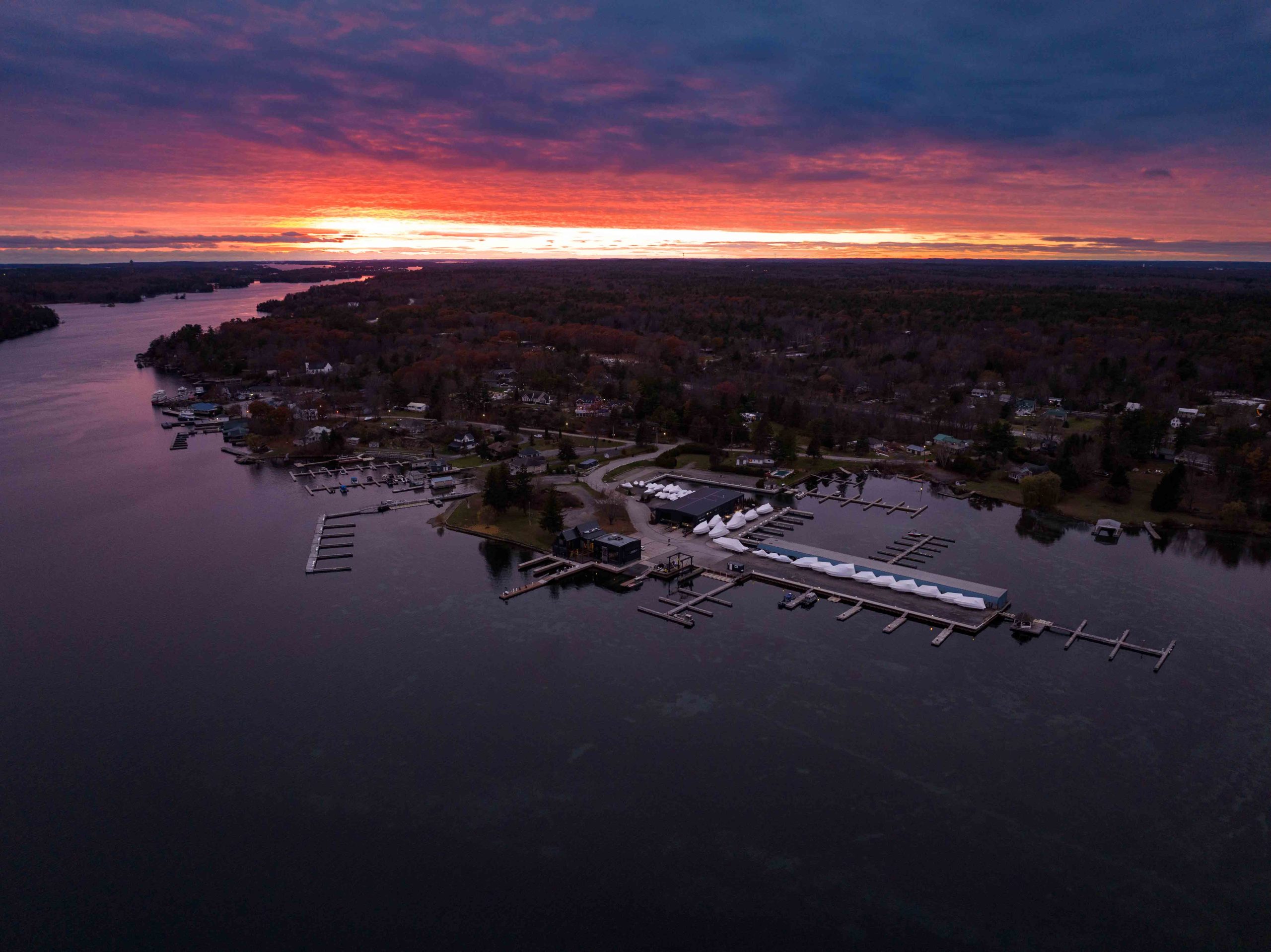
Rockport has the kind of beauty that first appears effortless. Boats, islands, stone, and light do a great deal of the work. But what gives the village its staying power is the story beneath that beauty. This is a place where boatbuilding, river trade, faith, hospitality, and daily life once met at the water’s edge, and where enough of that history remains for visitors to still feel it.
In the Riverlands, Rockport stands out not only because of what you can see from here, but because of what the village itself reveals when you slow down long enough to walk it.
This page will continue to evolve as more stories are told.