Athens
A village rooted in agriculture, shaped by history, and held together by community
Athens is closely tied to the farmland that surrounds it. The village grew from that relationship, and it still defines how the place functions today.
Formerly known as Farmersville, its history is visible in the layout, the buildings, and its civic presence. Today, Athens continues to serve the surrounding agricultural community, with daily life influenced as much by the countryside as by the village itself.
It is compact, practical, and unhurried, with the feel of a place where people know why they have come into town. Errands, school, work, local events, and familiar storefronts give Athens a clear sense of purpose without making it feel arranged for visitors.
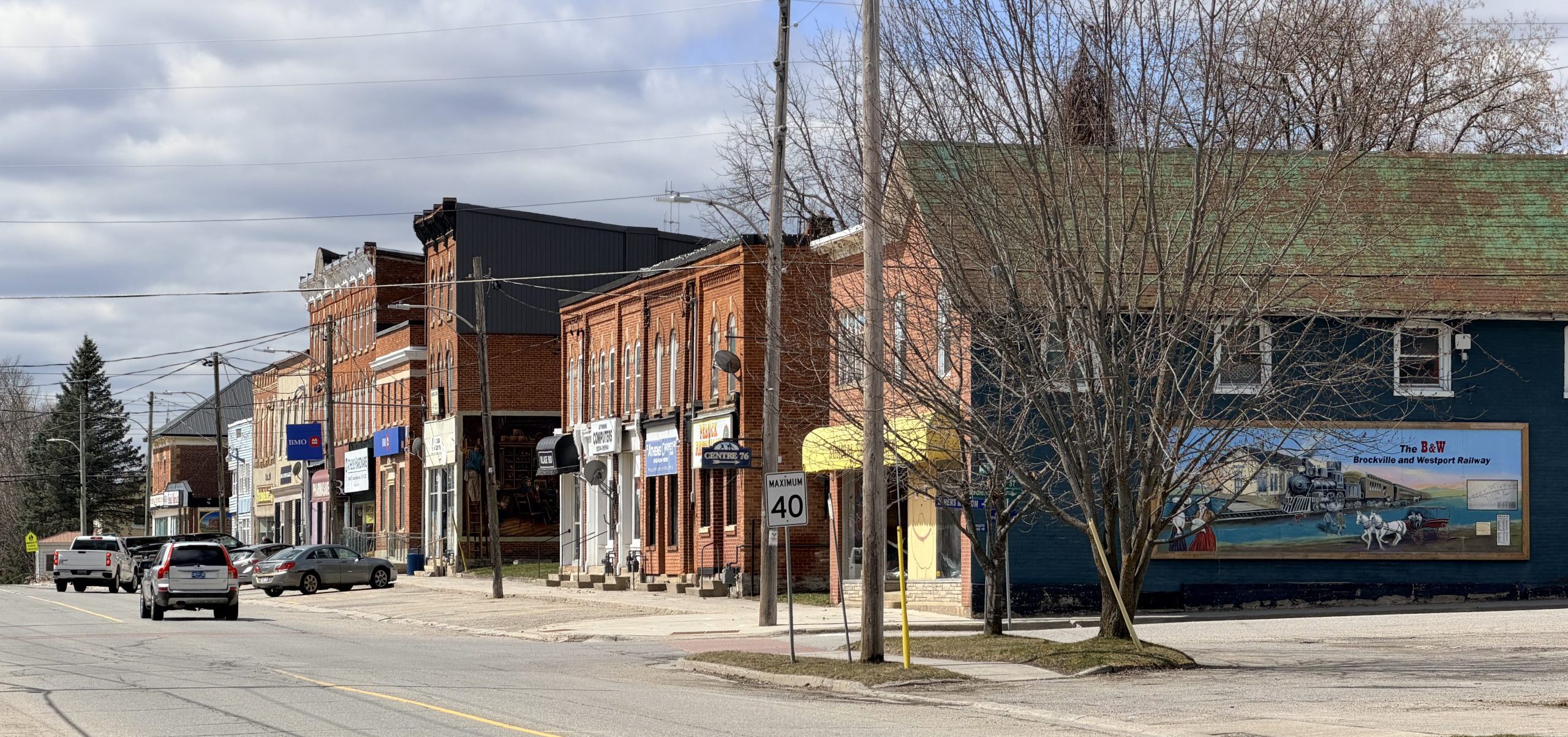
Main St, Athens, Ont.
Highlights
- Formerly known as Farmersville
- One of the region’s early farming communities
- A historic village shaped by agriculture and surrounding farmland, opened by Sir Wilfrid Laurier
- A main street with everyday essentials, including a grocery store, bakeries, restaurants, local businesses, and murals that add to the village’s character
- Home to the Joshua Bates Centre, a restored heritage hall above Town Hall
- A village where rural identity and everyday life remain closely connected
- Close to Charleston Lake and nearby cottage country
Why Athens belongs in a Riverlands trip
Athens adds a different perspective to the Riverlands. Set away from the waterfront and canal villages, it shows how the region functions beyond its better-known stops. Bakeries, cafes, garages, restaurants, and grocers give the village its daily pulse, with people coming into town for school, supplies, appointments, work, and local events. The historic murals add another layer, placing local memory directly into the village core and making history part of everyday main street life.
Including Athens in a Riverlands trip adds context. It brings in the agricultural setting, the everyday use of a small town, and the close relationship between village and countryside that defines much of this area.
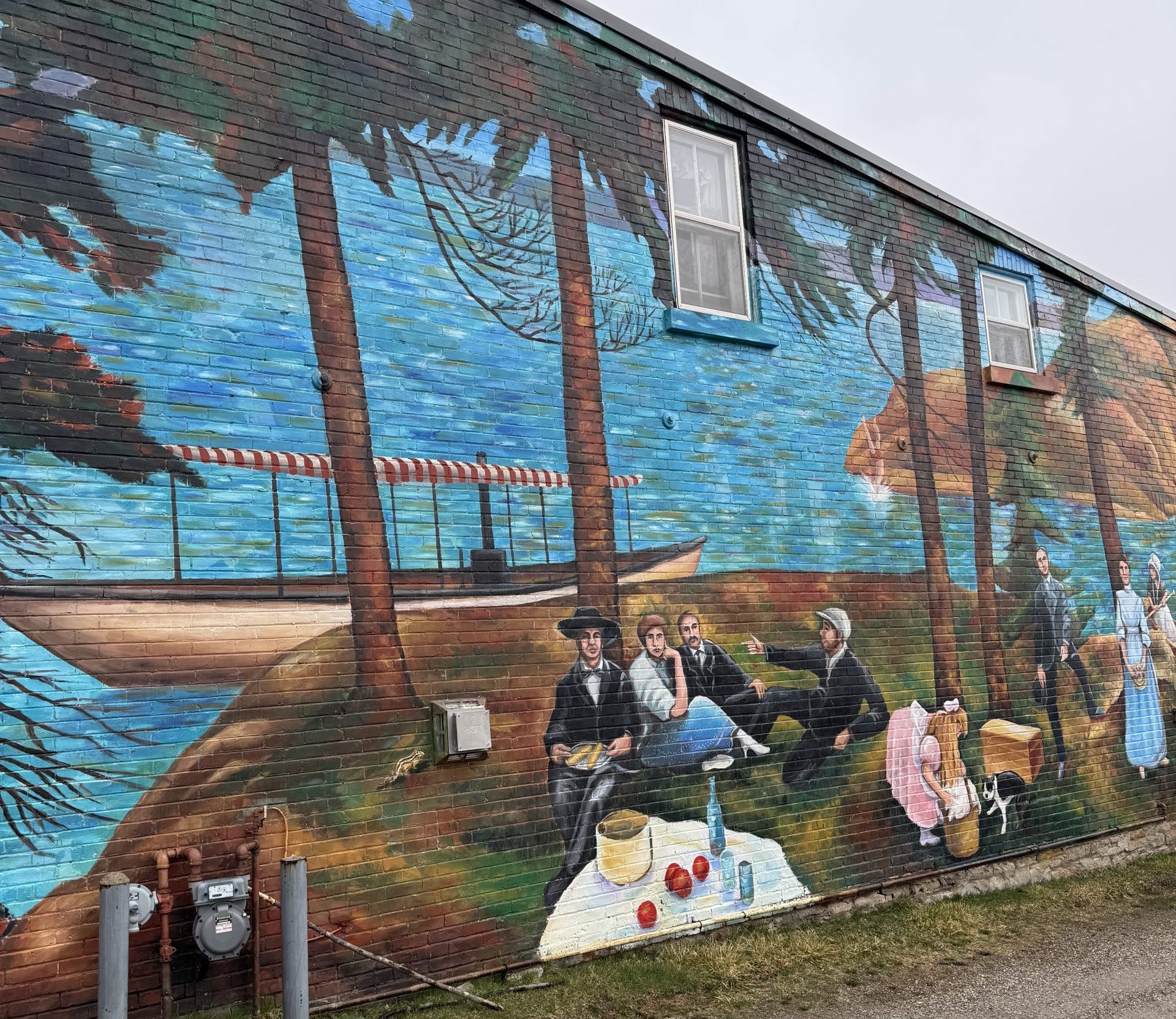
‘Charleston Lake Picnic’ mural, by Noreen Gibson. One of 11 outdoor murals in Athens, Ont.
History & heritage
Athens carries its history through places and traditions that are still active in village life. The Joshua Bates Centre, a live performance venue on the second floor of Town Hall, is one of the clearest examples. Named for Joshua Bates, founder of Farmersville, it connects the building to one of the earliest figures in the village’s development. Town Hall, constructed in 1904 and officially opened by Sir Wilfrid Laurier, remains a working civic building at the centre of the village.
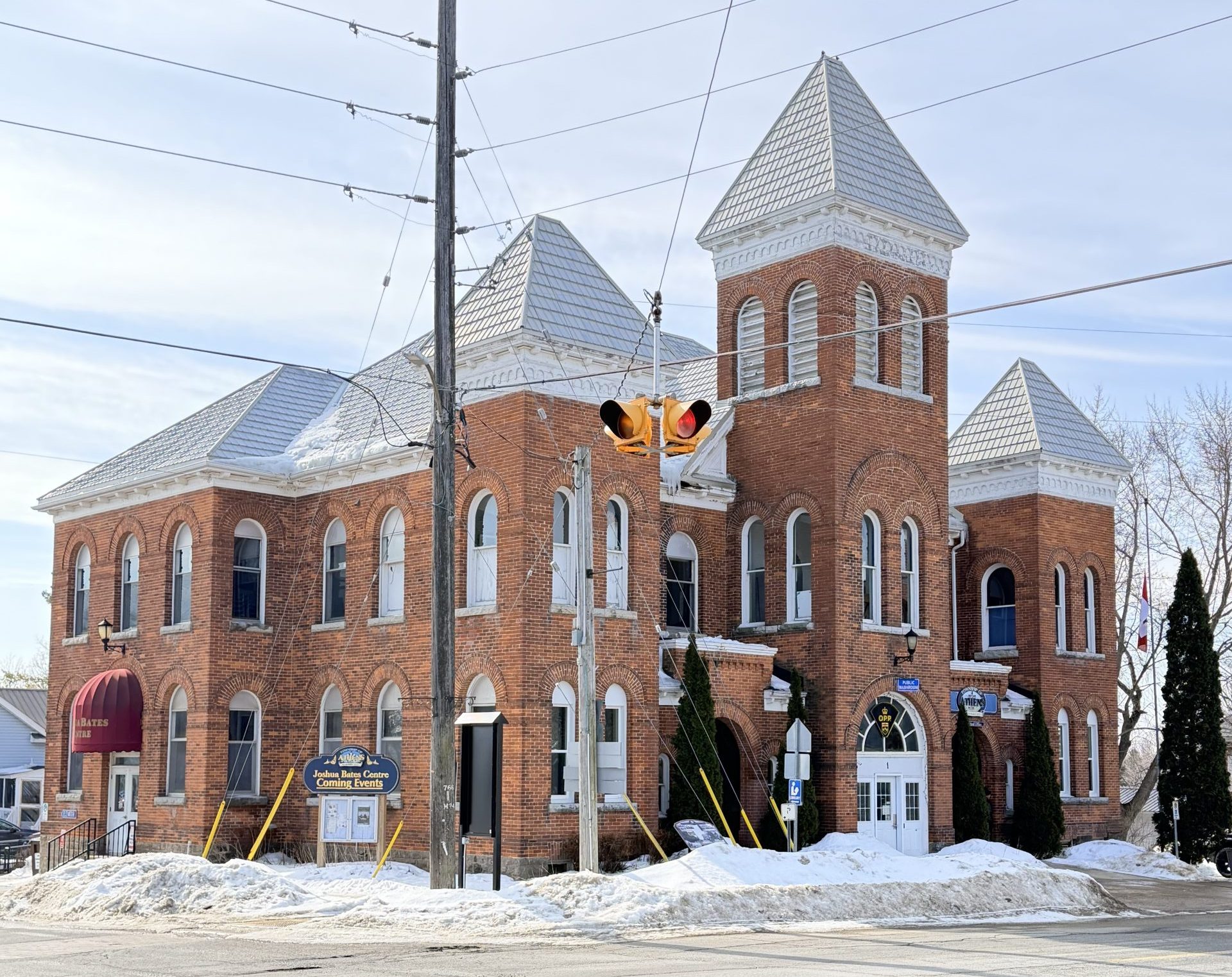
Joshua Bates Centre, Athens, Ont.
Athens is also tied to the dairy and cheesemaking history of Leeds and Grenville. By 1895, the two counties had 122 cheese factories, and early federal dairy records place factories in the Athens area under local postal listings. A 1911 federal history of dairying notes that P. W. Strong began manufacturing cheese at Farmersville in 1865, placing the village within the wider agricultural network that shaped this part of Ontario.
That connection to farming remains visible through the Farmersville Exhibition, which continues as a major community event. Along with the village’s murals and heritage buildings, it shows that in Athens, history is not separate from the present. It remains part of what the village continues to use, host, and carry forward.
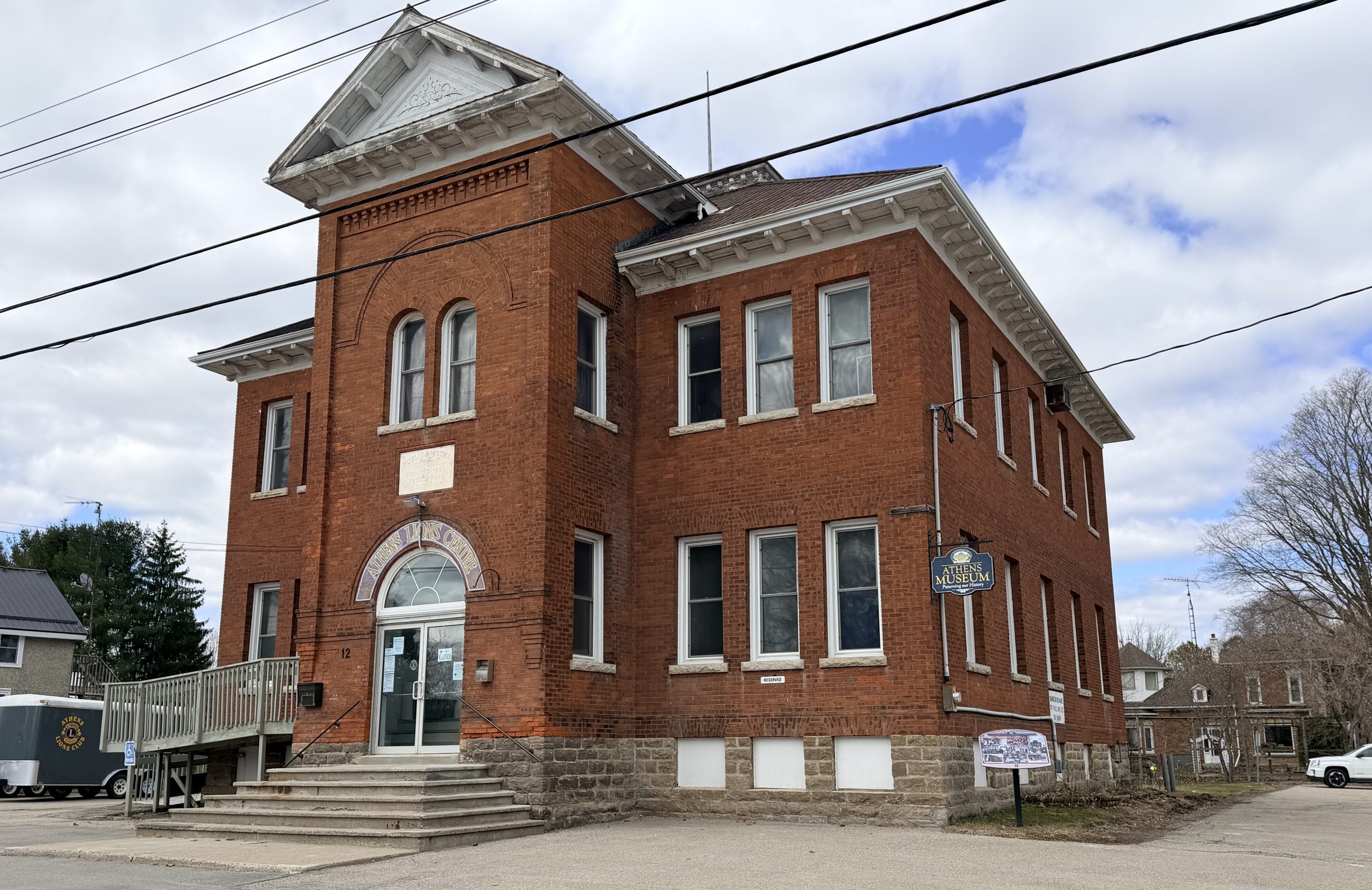
Athens and Area Heritage Museum
Grain & timber mills
Under its former name, Farmersville, grist mills and saw mills were part of the local economy, linking the village directly to the grain, timber, and farm life of the surrounding countryside.
That history matters because it explains the place at ground level. Grain was brought in from nearby farms. Lumber was cut for building and local use. These were not side industries. They were part of the everyday work that helped the village take shape and gave it a practical importance within inland Leeds and Grenville.
You do not need to see the mills still standing to understand what they meant. Their legacy remains in the logic of the village itself: a place formed by use, tied to the land around it, and built to serve the people who depended on it.
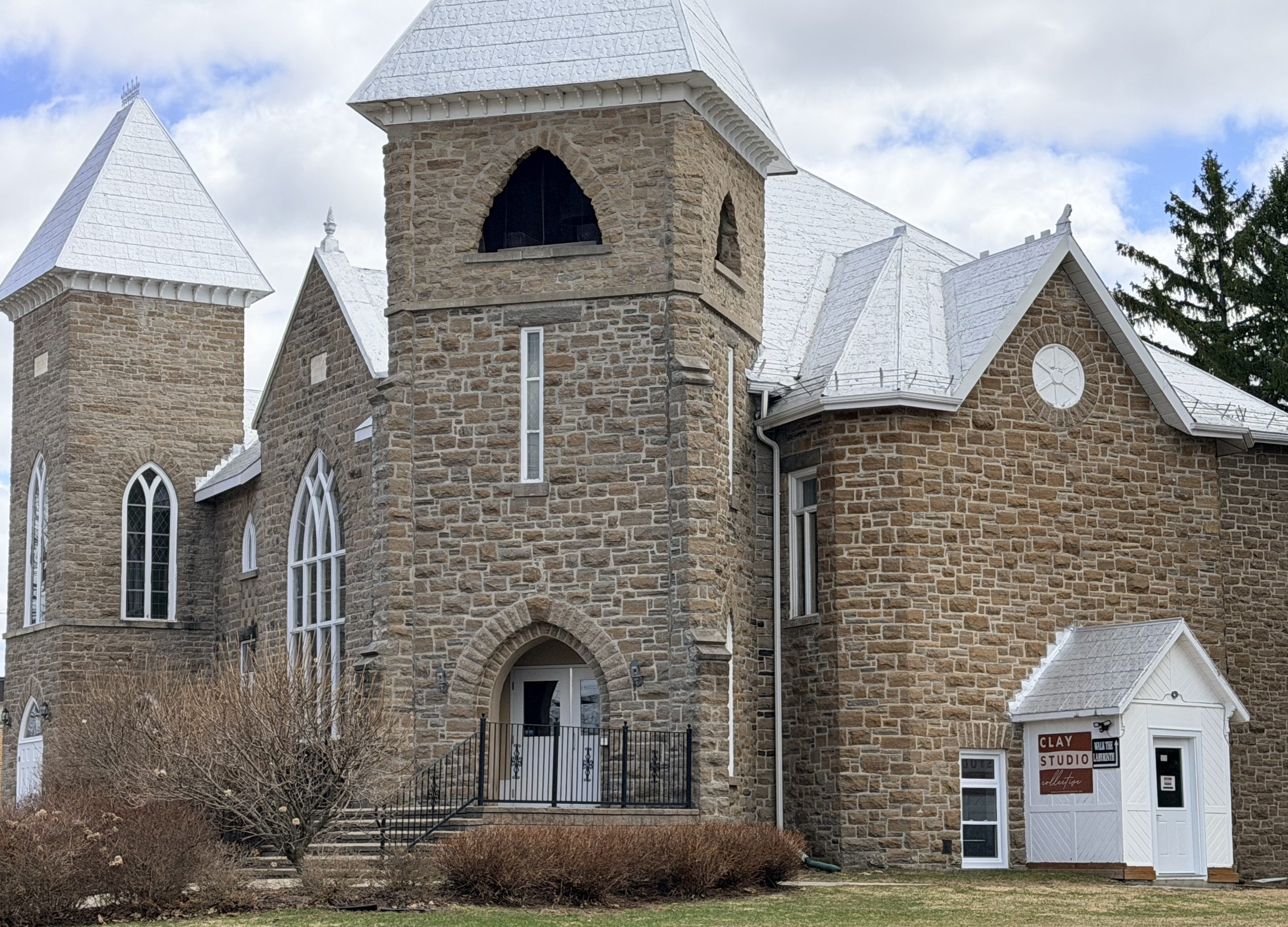
Athens United Church
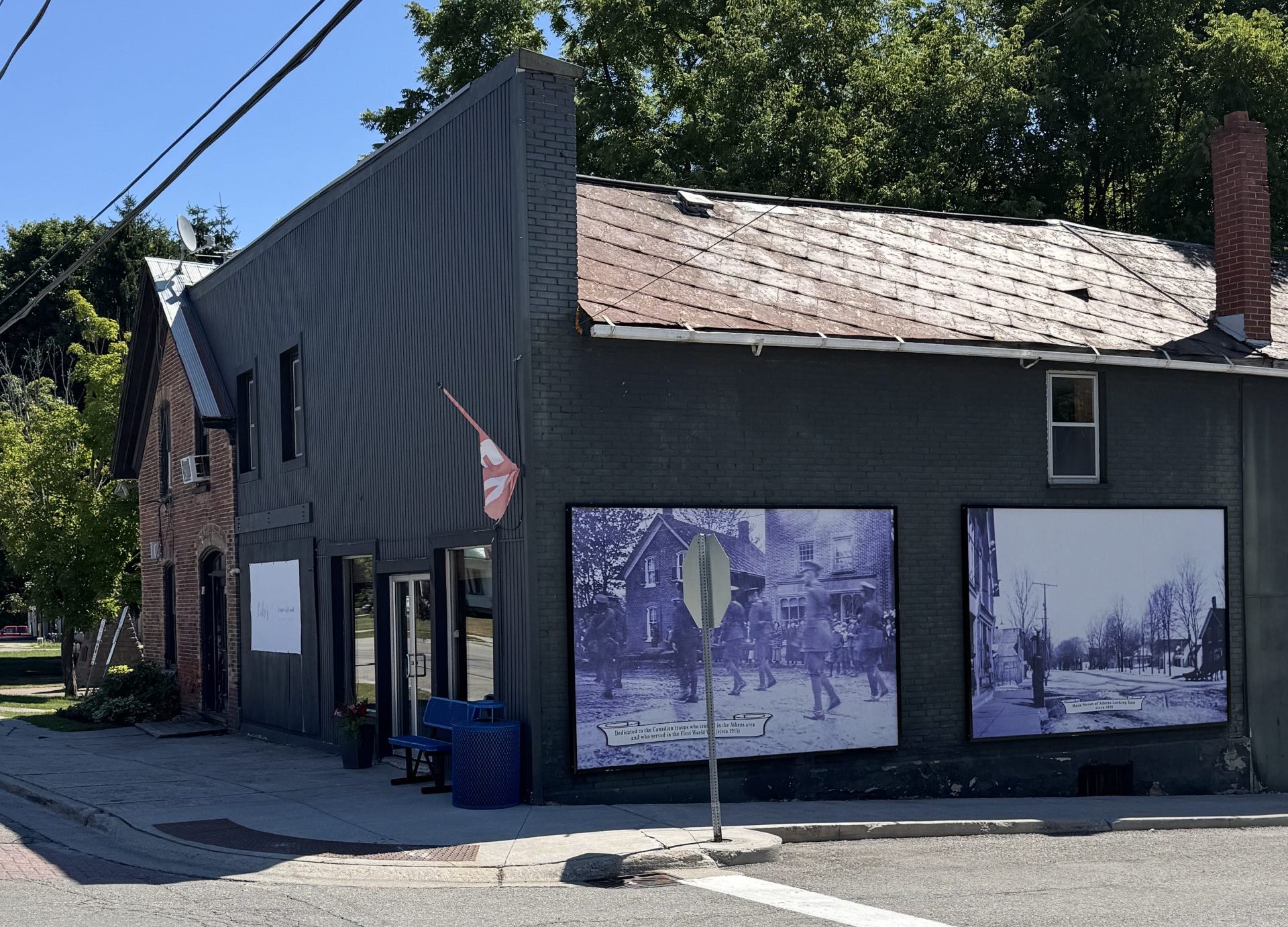
Luke’s European Style Market, Athens, Ont.
A good fit for travellers who…
Athens suits travellers who are interested in places that still make sense as lived communities. Its appeal is in how clearly the village still reads. Public buildings, local businesses, and the surrounding farmland remain closely connected, making Athens easy to understand as a place that still serves the community around it.
It works for people who want to understand the Riverlands beyond its waterfronts and better-known stops. In Athens, the village core, the surrounding farmland, the murals, the exhibition grounds, and the public buildings all contribute to a fuller picture of how this part of the region has developed.
This is a place for travellers who value context over novelty and who are interested in how a small town continues to hold together over time.
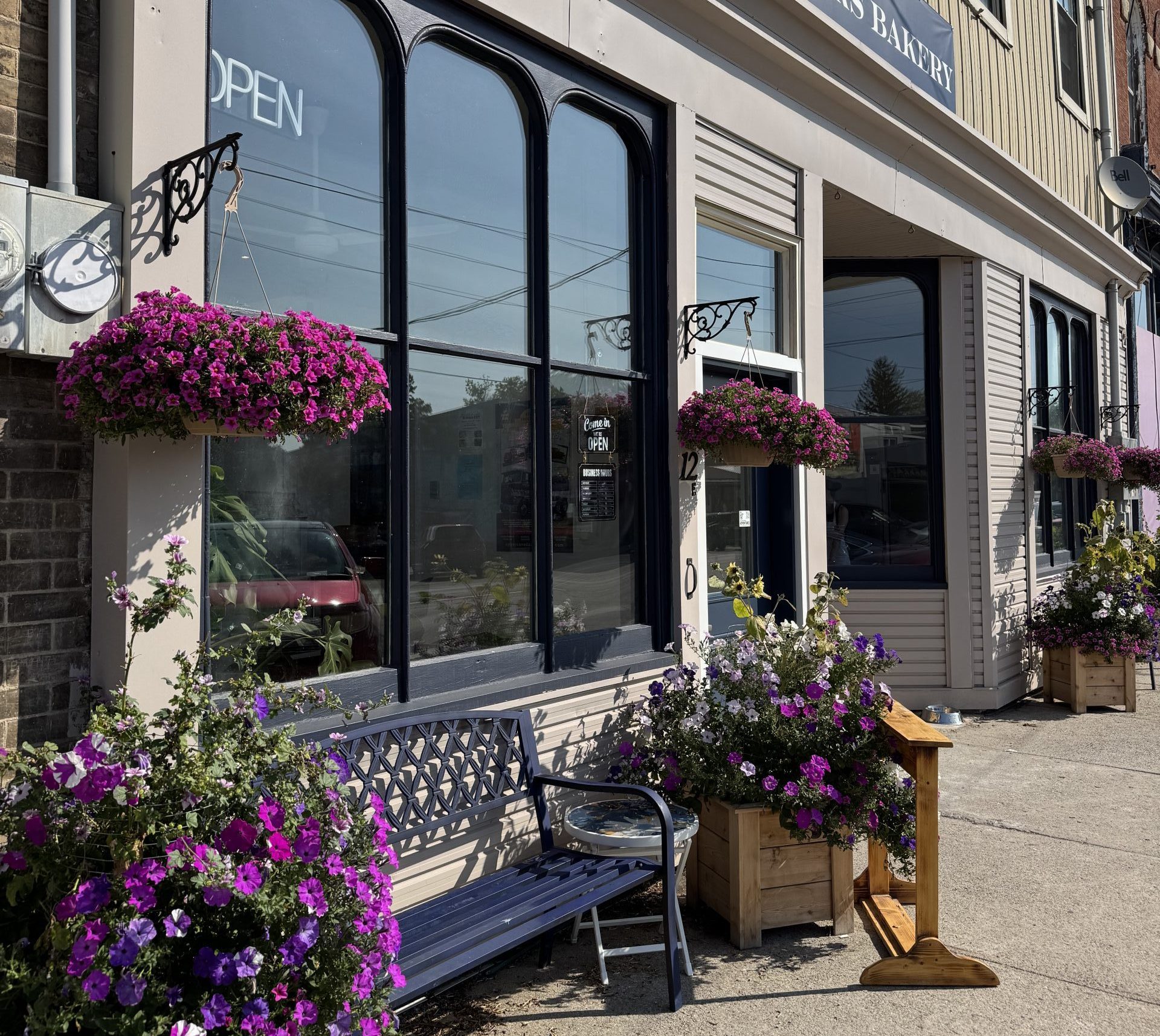
Big Waters Bakery, Athens, Ont.
How Athens fits into a longer stay
Starting in Athens allows time for a bakery or cafe stop, and for a walk through the village core, where murals, storefronts, and everyday movement offer an immediate sense of how the inland Riverlands is lived. Paired with Lyndhurst, Delta, Newboro, Chaffeys Locks, and Westport, it becomes the first village in a route that moves through farmland, village main streets, lake country, and canal-side communities.
Starting in Athens allows time for a bakery or cafe stop before continuing west. From there, the route can move through Lyndhurst and Delta, then on to Newboro, Chaffeys Locks, and Westport, building a day that shifts from inland village life to lakes, lockstations, canal landscapes, and one of the region’s best-known small towns.
For travellers staying in Brockville and Maitland, this inland route adds another dimension to a St. Lawrence-based stay. It brings together riverfront comfort and architecture with murals, rural heritage, and the smaller inland communities that help complete the wider picture of the Riverlands.
For those staying in Gananoque, a visit to Athens adds another dimension to a stay rooted in river life, opening onto farmland, inland communities, and the roads that connect them. Consider including County Road 3 from Lansdowne as part of the route. It winds through the granite, lakes, and forest of the Frontenac Arch around Charleston Lake, making the drive part of the experience.
Athens, in one line
Athens is a village best understood through what it still does well: serve the countryside around it.
This page will continue to evolve as more stories are told.