
Lyndhurst
Lyndhurst is small in scale, but rich in presence.
A waterside village centred on Ontario’s oldest surviving stone bridge.
Lyndhurst is built around one of the clearest village scenes in the Riverlands: bridge, water, and a compact historic core that still sits close to the countryside around it. Small as it is, the village has a strong visual identity. The bridge, the creek, and the modest scale of the place give Lyndhurst its character as soon as you arrive.
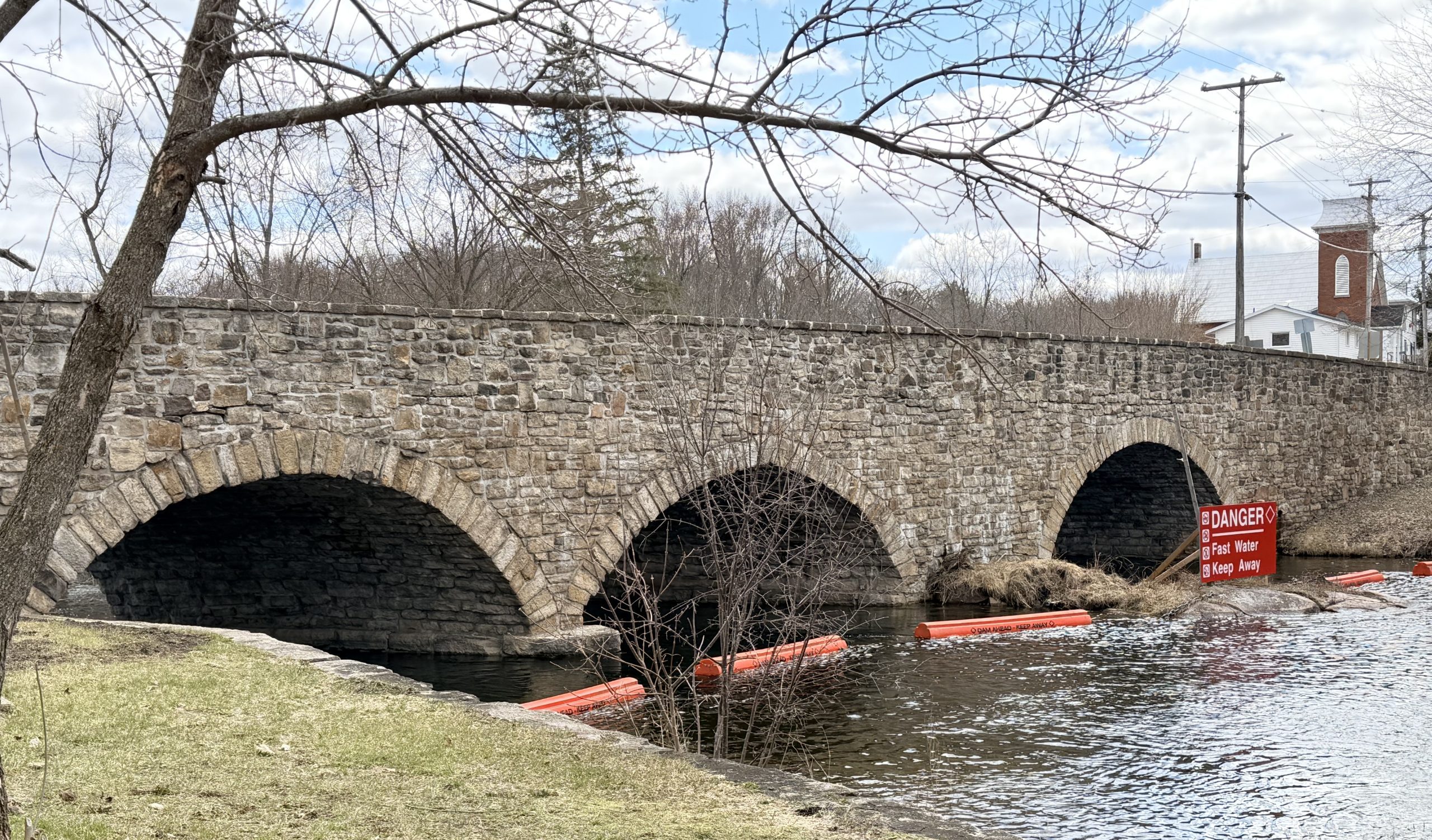
Lyndhurst Bridge
Highlights
- One of the most recognizable village scenes in the Riverlands, centred around Ontario’s oldest surviving stone bridge and the water
- A quiet village setting with a landmark bridge, scenic water views, and an easy pace
- An appealing stop for photographers, slow travellers, and visitors drawn to scenic drives, quiet places, or the chance to grab a bite and picnic waterside
- Easy to pair with nearby countryside, waterways, and other Riverlands villages as part of a broader day of exploring
- Home to the Lyndhurst Turkey Fair, one of the village’s best-known traditions and a longstanding community draw
- A place that feels especially beautiful in shoulder seasons, when the village becomes even quieter and the landscape takes on a softer mood
Why Lyndhurst stands out
Lyndhurst stands out because it is home to Ontario’s oldest surviving stone bridge. The bridge, the water, and the village core sit close together, giving the village a visual identity that is immediate and specific.
The bridge is not separate from the place around it. It remains part of the road, the village, and the life that still moves through Lyndhurst.
History and heritage
Lyndhurst was once known as Furnace Falls, a name that points to the village’s early industrial history. It was also home to Ontario’s first successful iron smelter. Much of that history remains tied to the water and the falls.
The bridge, built in 1856–57, remains the village’s defining landmark and Ontario’s oldest surviving stone bridge. Its design is said to recall older bridges in Scotland, a detail often linked to its Scottish-born designer, John Donald Roddick.
The bridge also carries traces of the village’s milling past. When several mills operated nearby, Lyndhurst played a much busier role than its present scale suggests, and millstones from Henry Green’s mill are said to remain preserved as caps on the bridge’s eastern approach pillars. Remnants of the Green-Harvey gristmill also remain on the east side of the bank, adding another visible link to the village’s milling history. The Roddick stone house on Jonas Street adds another surviving piece to that built history, extending the village’s story beyond bridge construction and industry into its domestic scale.
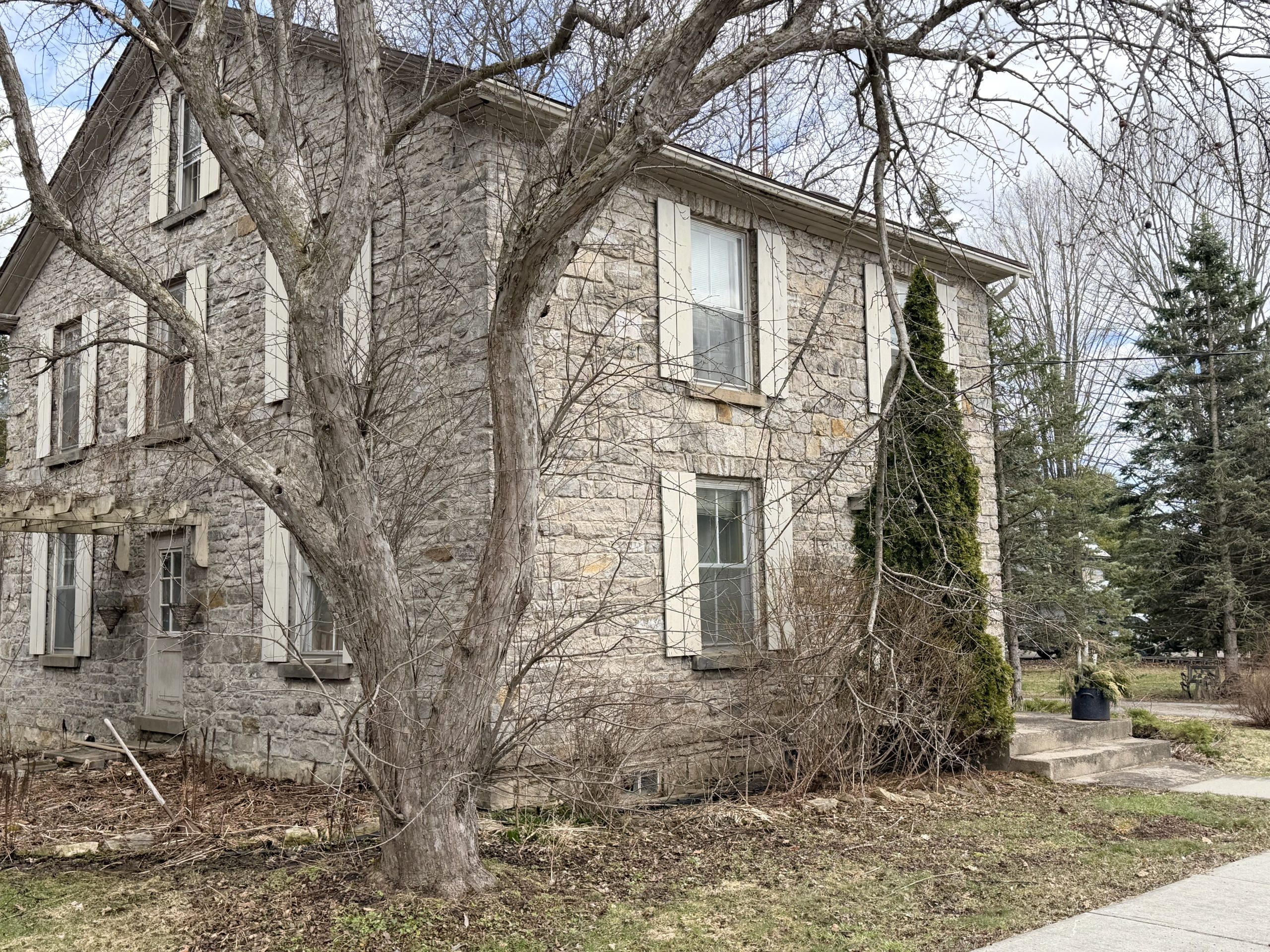
The Roddick House, Jonas St., Lyndhurst, Ont.
What a visit can look like
A stop in Lyndhurst usually begins at the bridge and the water, then moves outward from there. The Green Gecko is one of the village’s known draws and gives people a reason to stop beyond the view itself. Wing’s Bait reflects another side of village life, tied to fishing and camping, while Petra’s Place gives visitors a practical food stop before settling in by the water or continuing on through the region.
Lyndhurst works best when treated as part of a larger day. It pairs naturally with nearby lakes, back roads, and villages such as Delta and Newboro, where water, heritage, and smaller village stops remain closely connected.
Scenic character and nearby landscape
Lyndhurst is strengthened by its setting as much as by the bridge itself. Water remains part of the view, and so does the surrounding countryside.
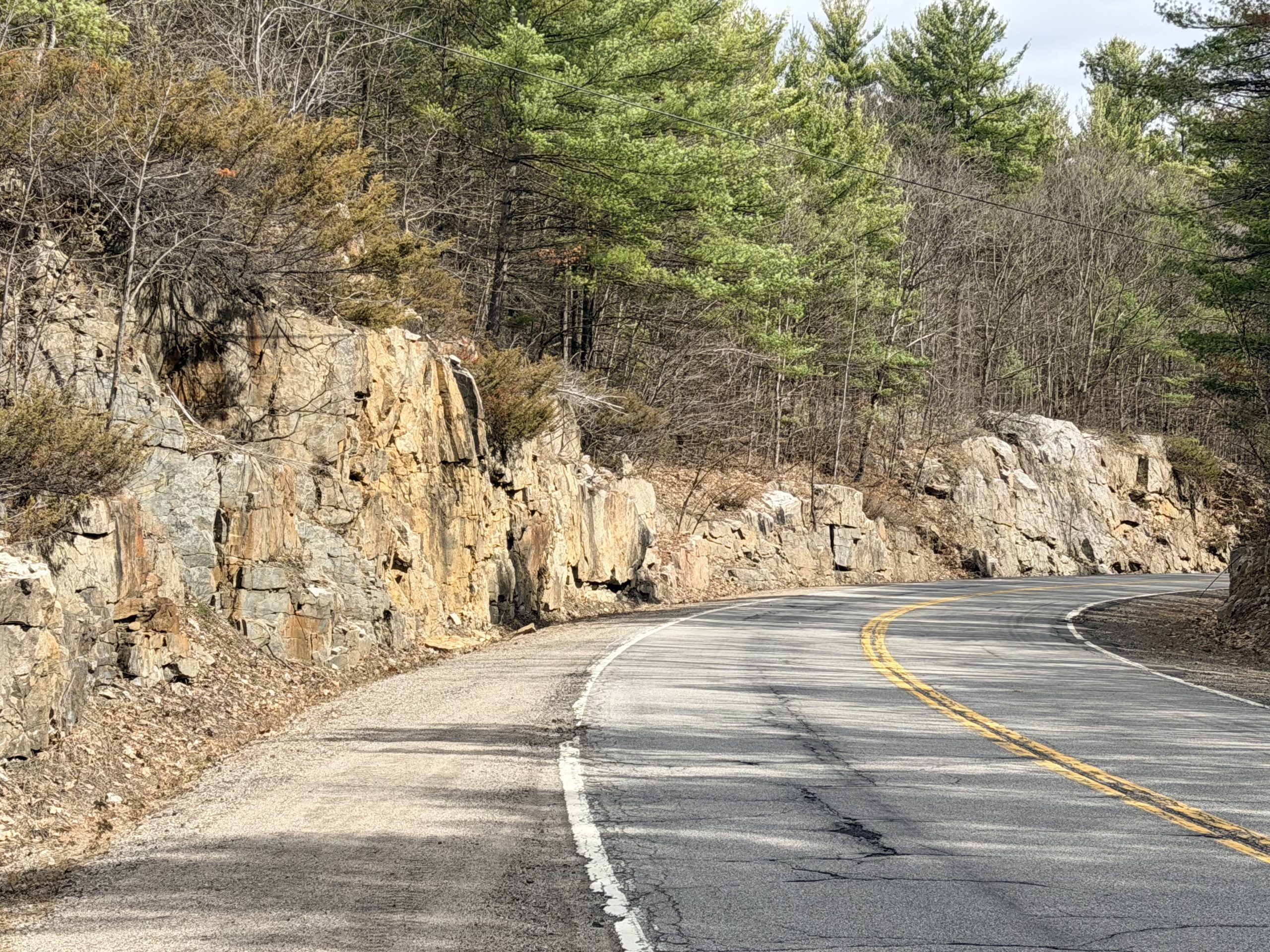
From the south, County Road 3 north from Highway 401 offers one of the strongest approaches into the village, with the Frontenac Arch landscape gradually coming into view. That route helps place Lyndhurst within a wider rural setting rather than as an isolated stop.
How Lyndhurst fits into a broader Riverlands stay
Lyndhurst works well from Brockville and Maitland, where a St. Lawrence stay can be extended inland through the Frontenac Arch and the smaller villages east of the Rideau corridor.
It also fits naturally from Gananoque, especially for travellers who want to move inland after time in the 1000 Islands. Paired with Delta and Newboro, Lyndhurst becomes part of a day shaped by bridges, mills, waterways, and village stops that remain close together.
Westport also makes sense as a base for a longer inland route that brings Lyndhurst into a day of back roads, heritage villages, and water-based stops.
Who Lyndhurst will appeal to
Lyndhurst will appeal most to travellers who notice how a place is put together. The bridge, the water, the village businesses, and the surrounding countryside all sit close enough together to make the place easy to understand in a short stop.
It is also a strong fit for people who like to pair scenic driving with smaller heritage villages, especially when those places still carry signs of working life as well as history.
This page will continue to evolve as more stories are told.