
Maitland
Maitland feels old in the best way.
Set along the St. Lawrence in Augusta Township, about 5 kilometres east of Brockville, it has an ease to it that comes from heritage buildings, mature trees, and the sense that life here has long been defined by the water. It does not try to impress in loud ways. Its appeal is steadier than that. Maitland draws people who notice architecture, appreciate a slower pace, and like the feeling of staying somewhere with real depth behind it.
Maitland is one of the province’s early St. Lawrence communities, with roots reaching back to the late 18th century. During the building of the Rideau Canal, it served as one point of access to the Rideau interior and prospered through that period of movement, supply, and connection. That early importance still shows in the village streetscape today, where heritage homes, church spires, and river views give Maitland a strong sense of continuity.
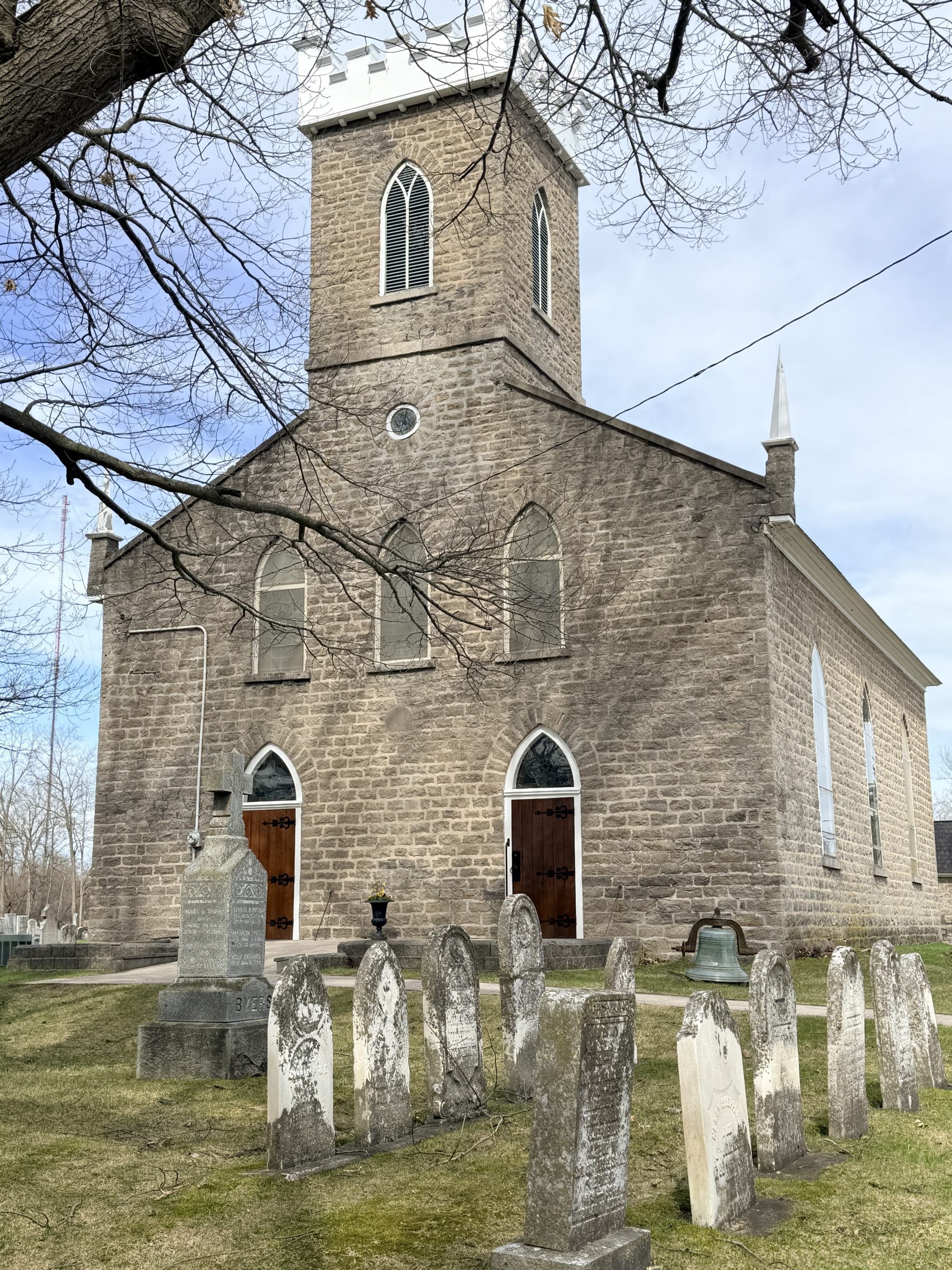
St James Anglican Church
Highlights
- The Maitland Tower, a striking privately owned remnant of an early 19th-century wind-powered flour mill built by George Longley
- Heritage layers that include the Founding of Maitland plaque and nearby sites such as the Blue Church along County Road 2
- St. James Anglican Church, a local landmark with parish roots in the early 19th century and a church building begun in 1826 and opened in 1827
- Homewood Museum, just outside the village, one of the oldest houses in Ontario, designated a National Historic Site of Canada and open by appointment through the Ontario Heritage Trust
-
Maison Maitland, with distinctive villas and a cooking school offering hands-on culinary classes and private group experiences
- A strong base for those drawn to heritage architecture, culinary stays, and slower travel
Why visit Maitland
Maitland suits people who are drawn to places where history is still visible.
You come here for the mood of the place. For the river close by. For the beauty of old buildings that have not been turned into something overly polished. For a village that still feels residential, grounded, and calm.
A visit to Maitland can be as simple as a drive through the village, time by the water, and an overnight stay that lets you settle in properly. It also works beautifully for travellers who want somewhere quiet to return to after exploring other parts of the Riverlands during the day.
This is not a place that asks for urgency. It rewards people who enjoy detail, atmosphere, and the feeling of finding somewhere that has kept its character.
History and heritage
Maitland’s story reaches back to the late 18th century. Its location on the St. Lawrence helped establish it early, and during the Rideau Canal construction years, the community served as one point of access to the Rideau interior and flourished as a place of movement, supply, and connection.
The community was named for Sir Peregrine Maitland, Lieutenant-Governor of Upper Canada from 1818 to 1828. Maitland began as a planned village on the St. Lawrence in 1824, and early enterprises such as George Longley’s store, post office, and mill helped shape the community that followed. By about 1850, it had become a small but active community, and traces of that period still define the village today.
St. James Anglican Church is one of the clearest expressions of that continuity. Construction began in 1826, regular services started in 1827, and the church was dedicated in 1830. It remains a significant part of Maitland’s built heritage and gives the village one of its most recognizable historic silhouettes.
Another landmark worth noting is the Maitland Tower. Built by George Longley in the late 1820s as part of his milling operation, it began as a stone windmill tied to flour production on the river. Wind power proved unreliable, and the site later shifted to steam-powered milling. The tower is privately owned today, but it remains an important visual reminder of the enterprise that helped establish early Maitland.
Just outside the village, Homewood Museum adds another layer. The house, built in 1799 to 1800, is recognized as a National Historic Site of Canada and is closely associated with the Jones family, one of the early families connected to the settlement of this part of the St. Lawrence corridor. It is open by appointment through the Ontario Heritage Trust, is one of the oldest houses in Ontario, and speaks to the depth of settlement in this part of the St. Lawrence corridor.
What makes Maitland appealing is that this history is not tucked away behind interpretation panels alone. It is visible in the proportions of the homes, the age of the streets, the church, the stonework, the tower, and the overall rhythm of the village.
That heritage story is also reinforced by the Founding of Maitland plaque in the community. And for visitors exploring a little farther along County Road 2, the Blue Church is another nearby heritage site that adds context to this stretch of the St. Lawrence.

What a visit can look like
A visit to Maitland might begin with a slow drive through the village, noticing the architecture and the way the river remains close at hand.
From there, you could spend time by the water, explore the well-used trail system behind MERC Hall, known locally for walking, snowshoeing, and cross-country skiing, or visit the Maitland Garden of Hope, known for its themed plantings and pollinator-friendly focus, with tours available by pre-booking. Maitland also works as a quiet starting point for a day that includes Brockville, Prescott, or inland communities across the Riverlands.
This is a place that works especially well when you give it room. Not because there is so much to rush between, but because its character is best felt gradually.
Food, stays, and nearby experiences
Maitland is especially appealing for travellers who value where they stay as part of the trip itself. The village offers a more intimate and atmospheric alternative to a standard hotel stay, with the river and heritage setting doing much of the work.
Maison Maitland is a key part of the village’s appeal. The villas offer one of the region’s most elevated places to stay, and the on-site cooking school gives visitors the chance to book hands-on culinary classes and private group experiences in a heritage setting.
Maitland also places you within easy reach of Brockville, where you can access additional dining, shops, cultural sites, and waterfront activity, while still returning to somewhere quieter at the end of the day. Prescott is also close by, making Maitland well positioned for travellers exploring this stretch of the St. Lawrence.
How Maitland fits into a broader Riverlands trip
Maitland makes sense as a base for travellers who want the St. Lawrence close by and a quieter place to come back to.
If you are based in Brockville or Prescott, Maitland is an easy and worthwhile addition, whether for a heritage stop or simply a change of pace. It fits naturally into a St. Lawrence day, especially alongside places like Rockport or Gananoque, and can also be paired with inland drives or communities such as Delta, Athens, and Merrickville as part of a wider Riverlands itinerary.
What makes Maitland especially interesting is that it is not only holding onto its past. There are people in the community continuing to shape what comes next, adding new layers through places like the Chart House, described as a social and intellectual hub, and The Stables, imagined as more than a performance venue but as a space that invites the community not just to watch, but to participate. With a wellness centre also planned for the Manor, Maitland feels like a place where heritage is not standing still. It is still being lived in, added to, and reimagined.
This page will continue to evolve as more stories are told.