
Why Food Journeys Thrive Beyond Major Cities
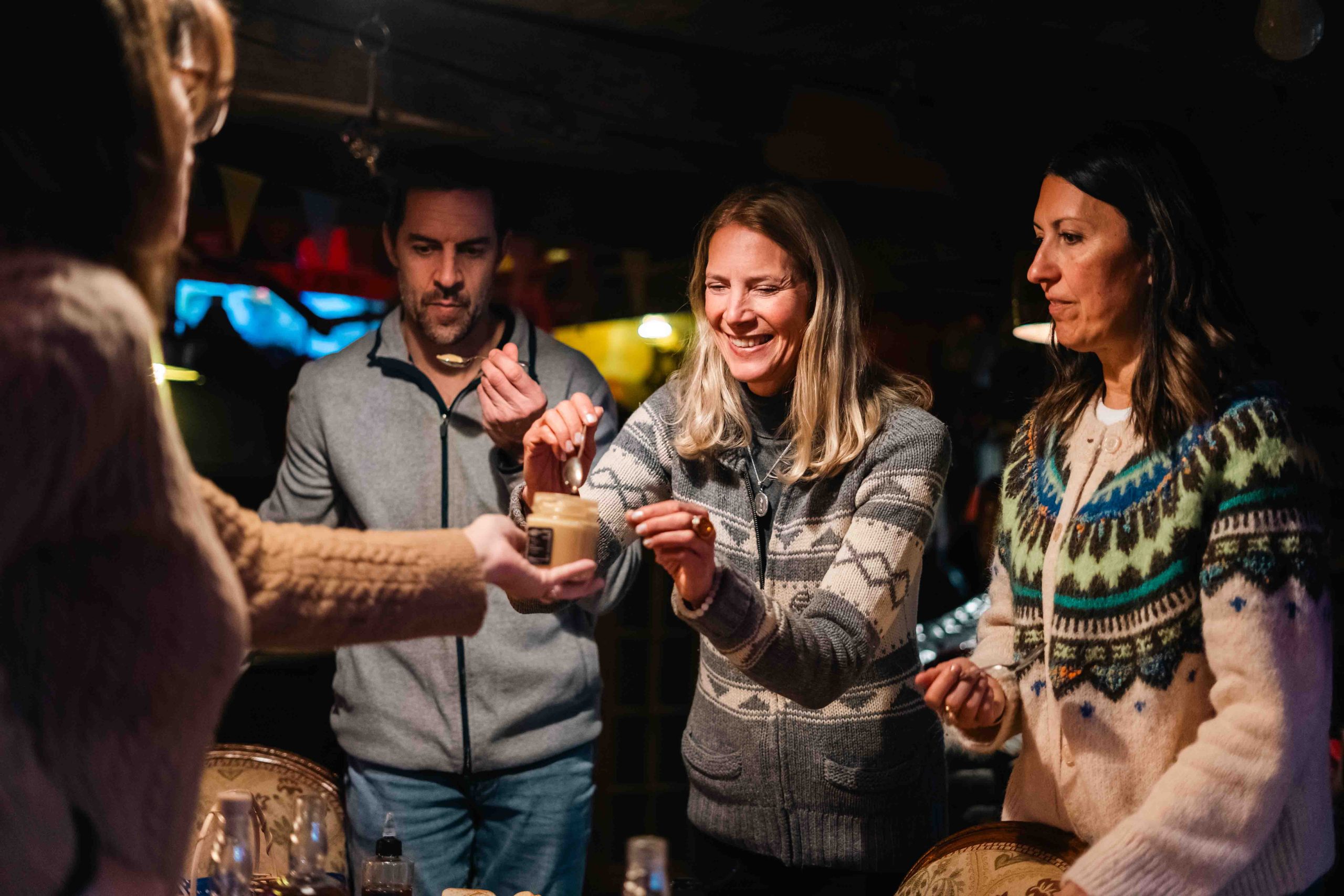
Rockport Barn, Rockport
Culinary tourism is often framed as an urban pursuit. Big cities. Celebrated restaurants. Long reservation lists. The assumption is that a remarkable food experience requires density, choice and a constantly changing dining scene.
But beyond the major cities, food can offer something different.
In the Riverlands, the distance between the field, the maker and the table becomes shorter. Travellers can see where ingredients are grown, meet the people who transform them and begin to understand why a particular product belongs to a particular place.
Outside major cities, culinary tourism thrives not because there is more choice, but because there is more connection.
That connection is becoming more valuable. As celebrated destinations grow busier and travel experiences become easier to replicate, many travellers are looking beyond the familiar centres for something more specific to place. Rural food journeys offer direct access to landscapes, producers and seasonal rhythms that cannot simply be transferred elsewhere. Their growing appeal is not only about escaping crowds. It reflects a desire for experiences that feel particular, personal and difficult to reproduce.
The landscape is part of what you taste
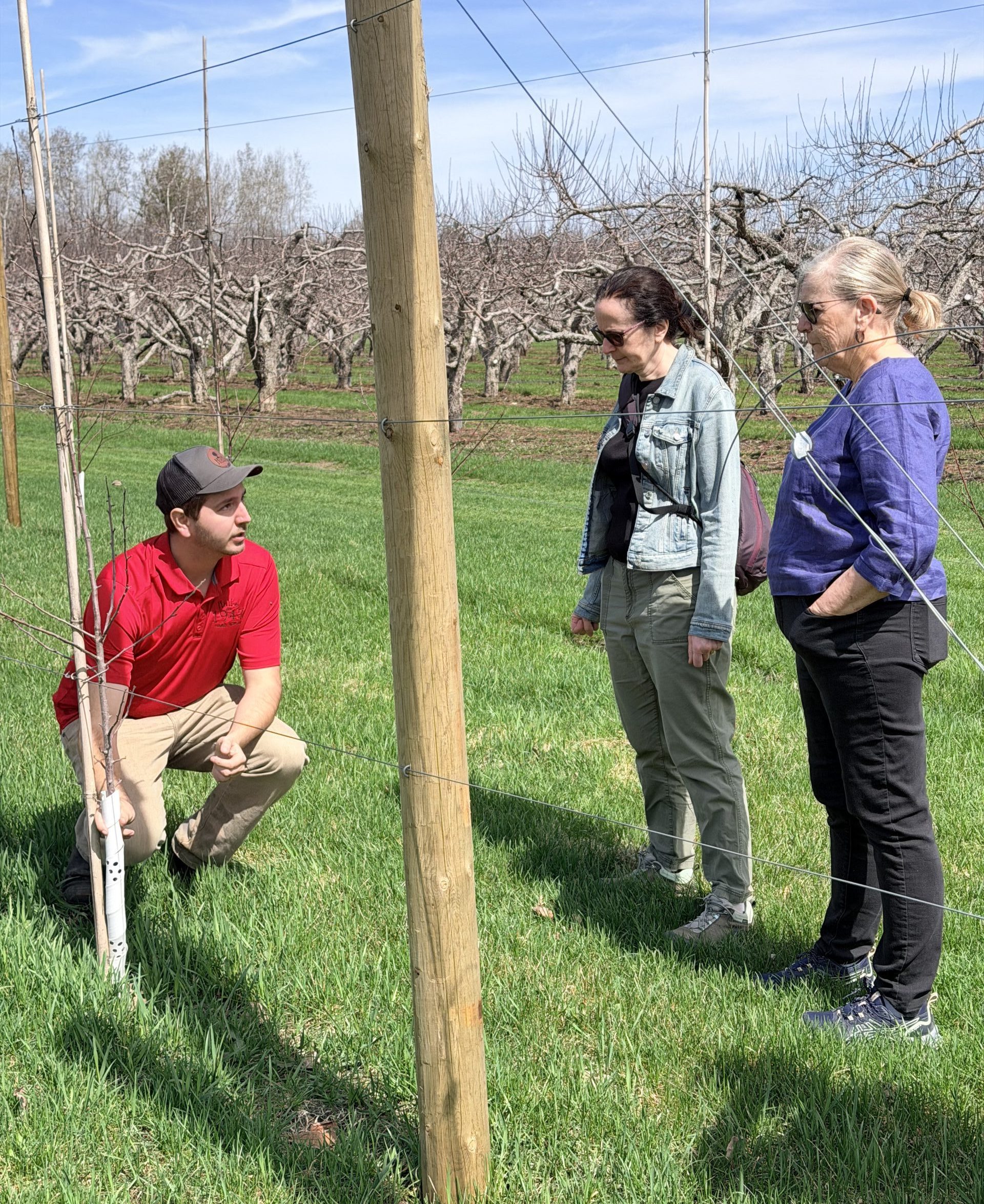
Hall’s Apple Market, Brockville
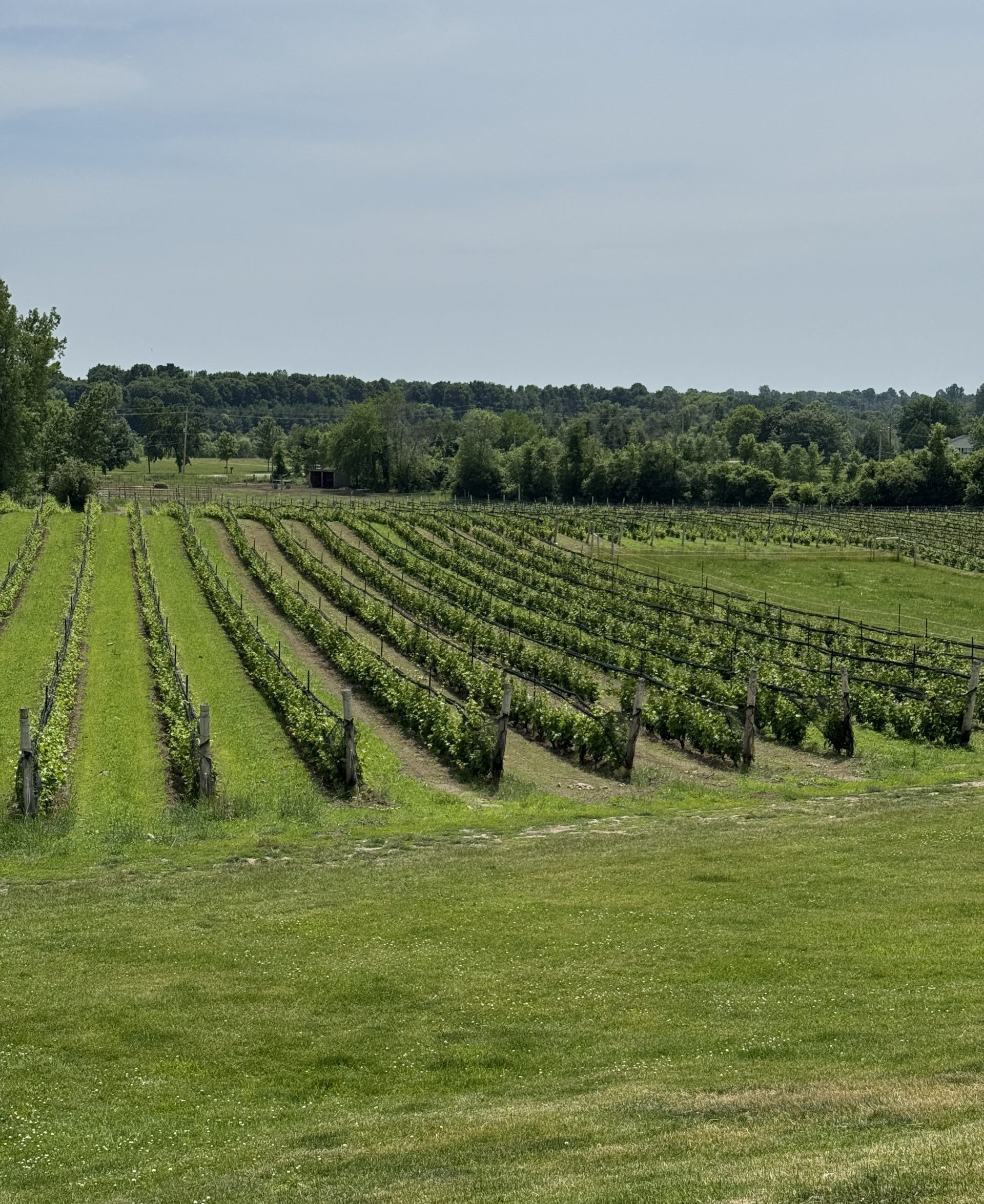
Scheuermann Vineyard & Winery, Westport
In rural communities, food production remains visibly tied to the land. Orchards, vineyards, farms and sugar bushes are not distant suppliers hidden behind a restaurant menu. They are part of the journey itself.
At Hall’s Apple Market outside Brockville, for example, the story begins in an orchard the Hall family has farmed since 1947. Apples leave the rows and reappear as cider, apple butter, baked goods and other products sold on the same property. What might otherwise be a simple glass of cider becomes an introduction to several generations of agricultural knowledge and adaptation.
In Westport, Scheuermann Vineyard and Winery offers another example. Allison and François Scheuermann began by studying the property, testing its potential and planting an initial plot of Pinot Noir and Chardonnay. The vineyard eventually grew to include approximately 9,000 vines across 6.3 acres. Visitors are not encountering wine as an abstract luxury product. They are sitting within the landscape that made its production possible, looking across the vines toward Sand Lake and experiencing how climate, soil and exposure influence what can be grown here.
This visibility changes the experience. The landscape is no longer scenery surrounding the meal. It becomes one of its ingredients.
Seasonality is real, not decorative
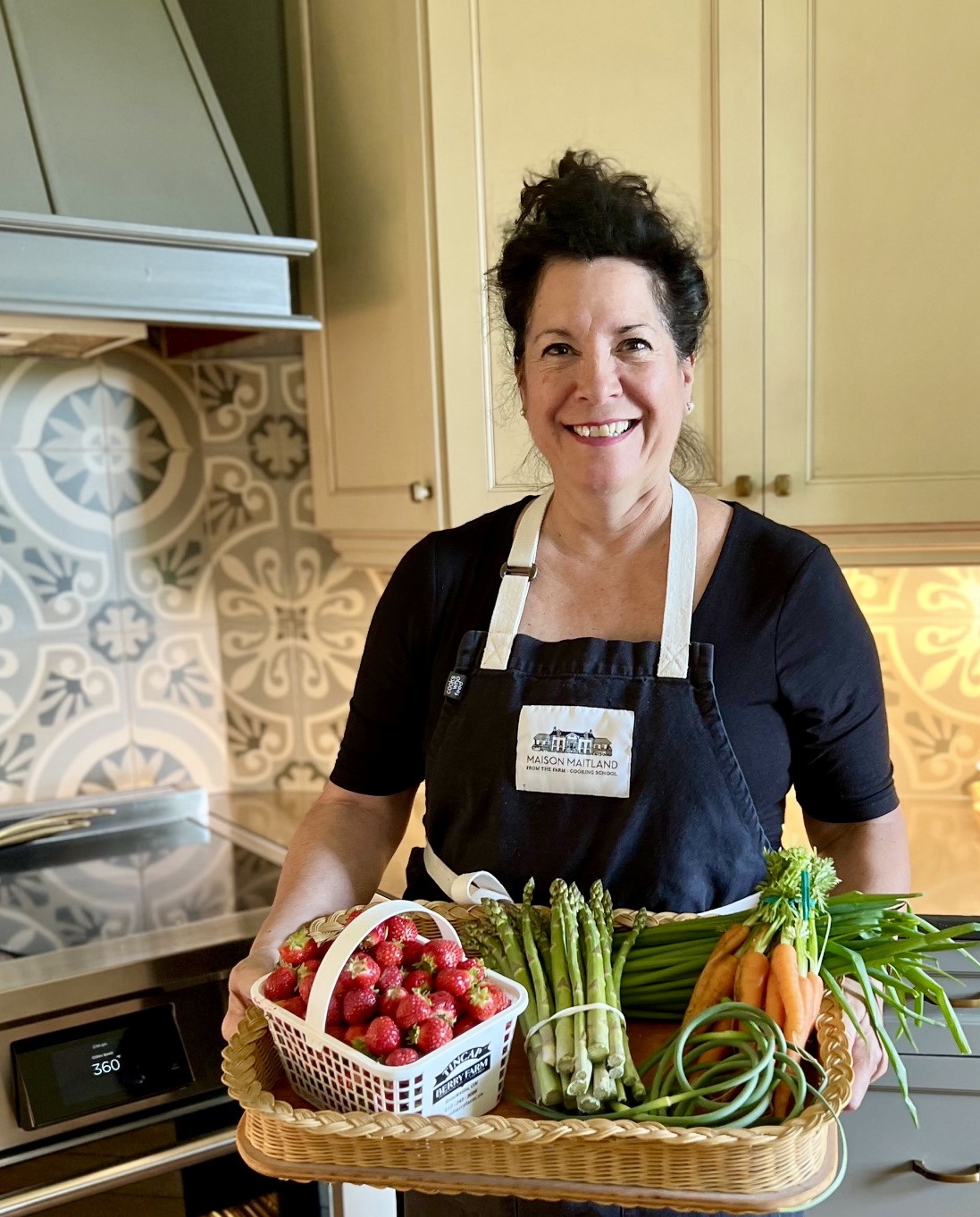
Chef Cynthia Peters, Maison Maitland Cooking School & Villas, Maitland
Chef Cynthia Peters, Maison Maitland Cooking School & Villas, Maitland
In cities, seasonality often appears as a phrase on a menu. In the countryside, it determines what is available, when a business opens and what a producer can make.
An orchard moves through blossom, fruit development and harvest. A farmers’ market changes week by week. A sugar bush has a brief production season dictated by temperature. A vineyard works toward a harvest that cannot simply be moved to a more convenient date.
That means a food journey through the Riverlands will not be exactly the same in May, August and October. Spring might bring maple products and early market crops. Summer introduces berries, vegetables and outdoor farm experiences. Autumn belongs to apples, grapes, harvest tables and the work of preserving what the land has produced.
At Maison Maitland Cooking School and Villas, Chef Cynthia Peters builds that relationship with the local food system into her work. Its Feast On® certification recognizes a demonstrated commitment to sourcing Ontario-grown food and drink. For guests, that commitment brings the surrounding harvest into the kitchen, allowing what is grown nearby and available now to help shape what reaches the table.
This is not an inconvenience to be engineered out of the experience. It is part of what makes the experience truthful.
When something is unavailable, there is usually a reason. The crop is not ready. The harvest was smaller than expected. A product sold out because it was made in limited quantities. These realities allow travellers to understand food as the result of weather, labour, patience and judgment rather than something that simply appears on demand.
The person behind the food is often still in the room
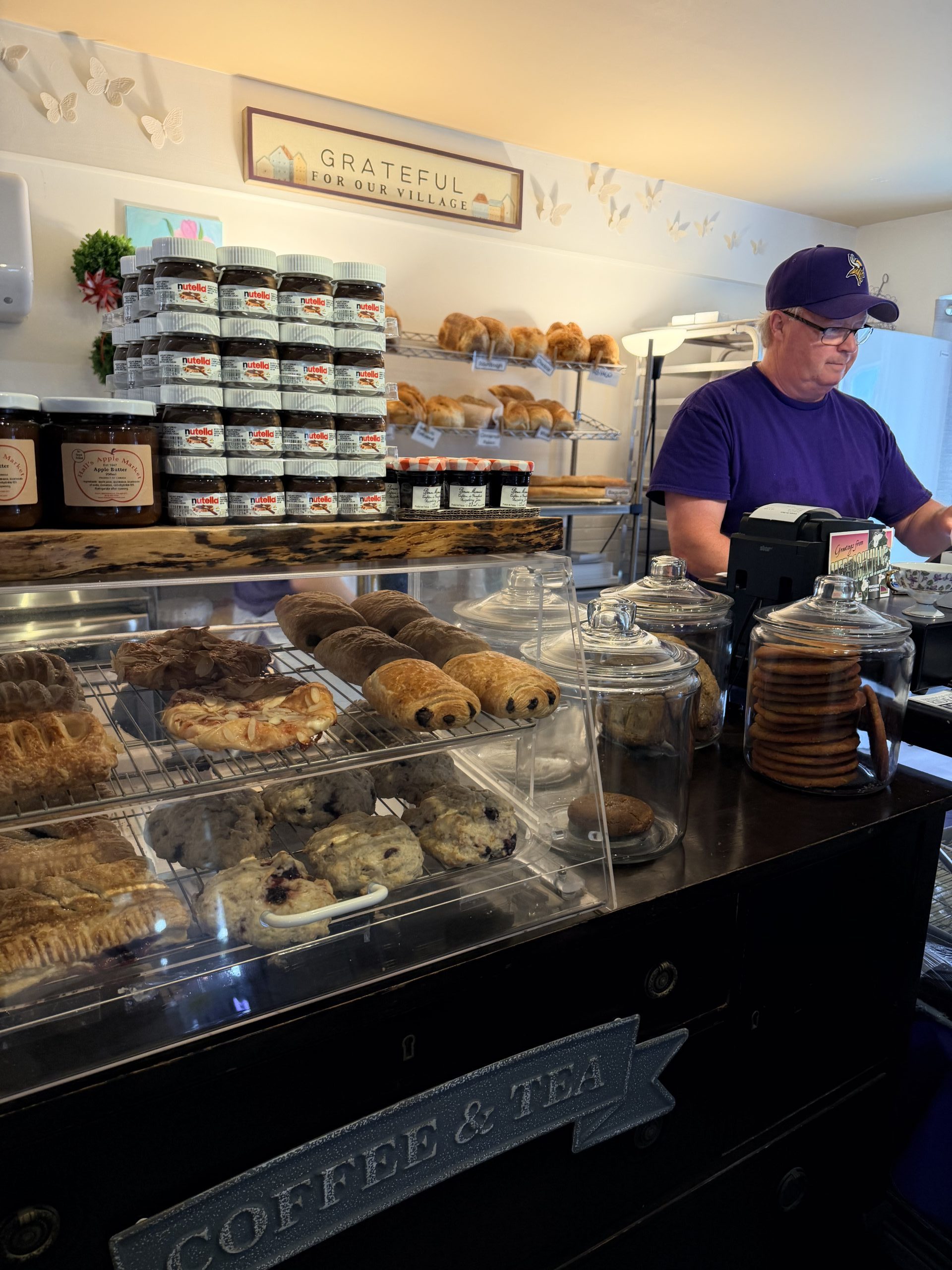
Violets on Main, Merrickville
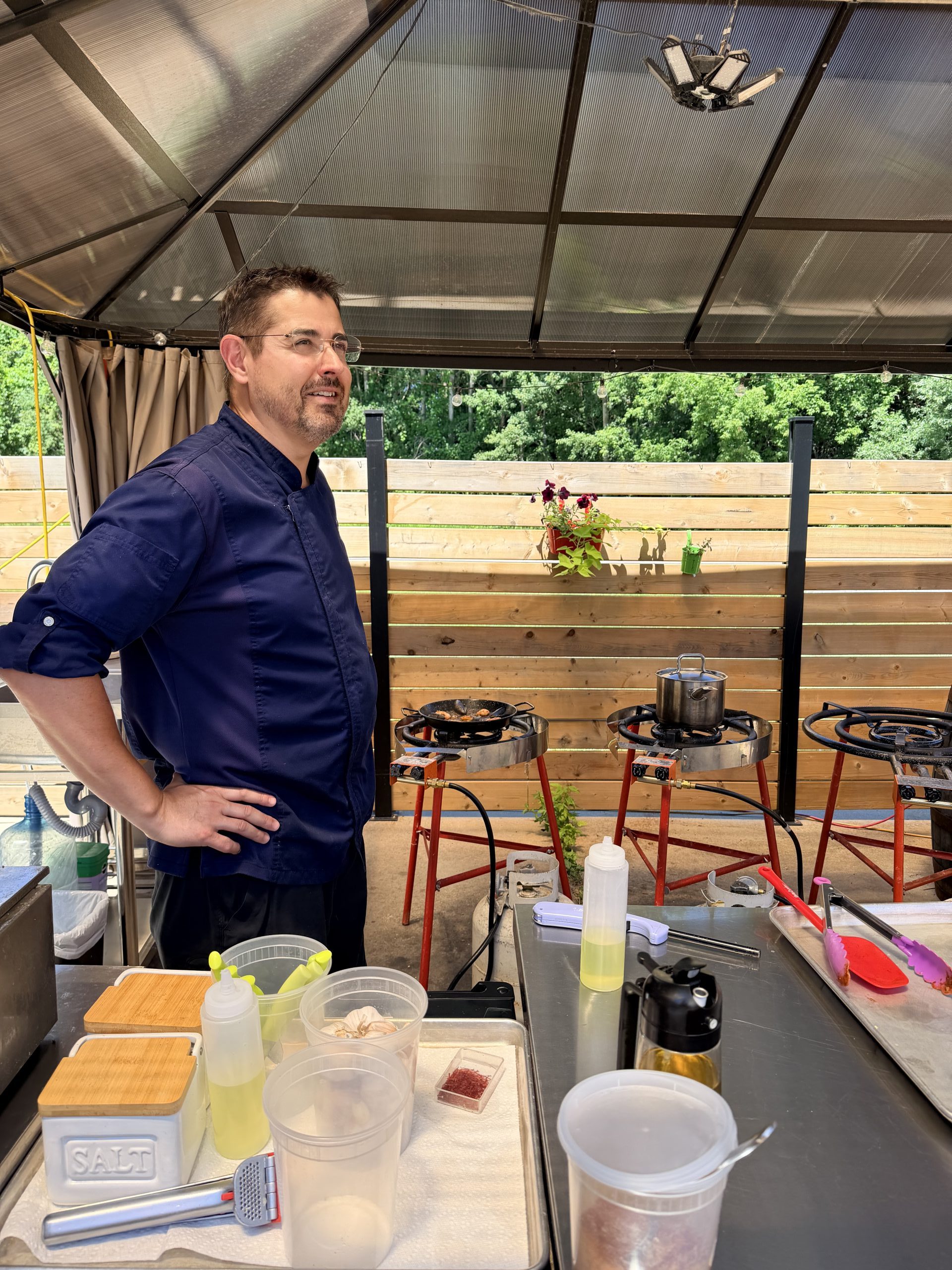
Little Barcelona, Prescott
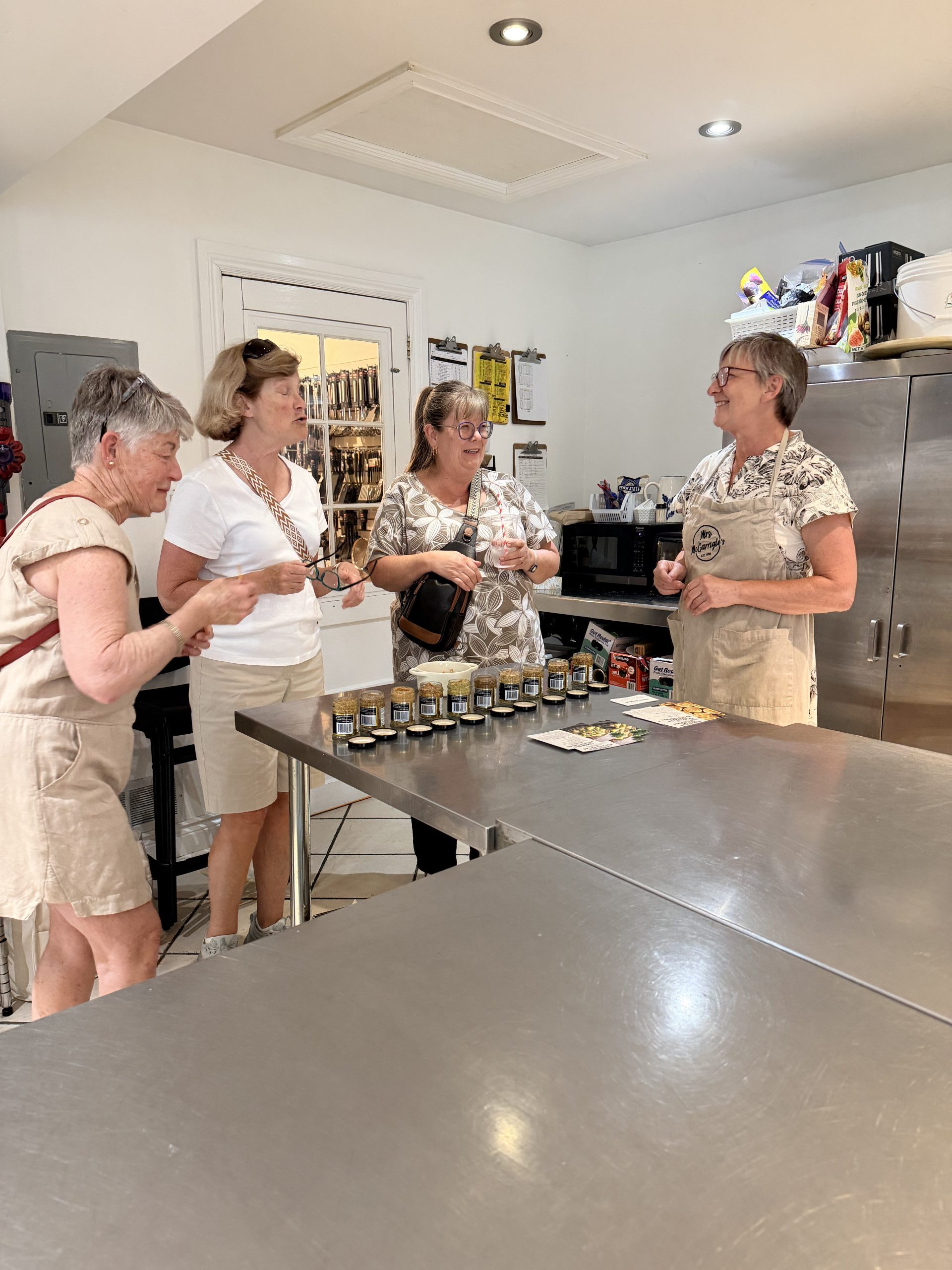
Mrs. McGarrigle’s, Merrickville
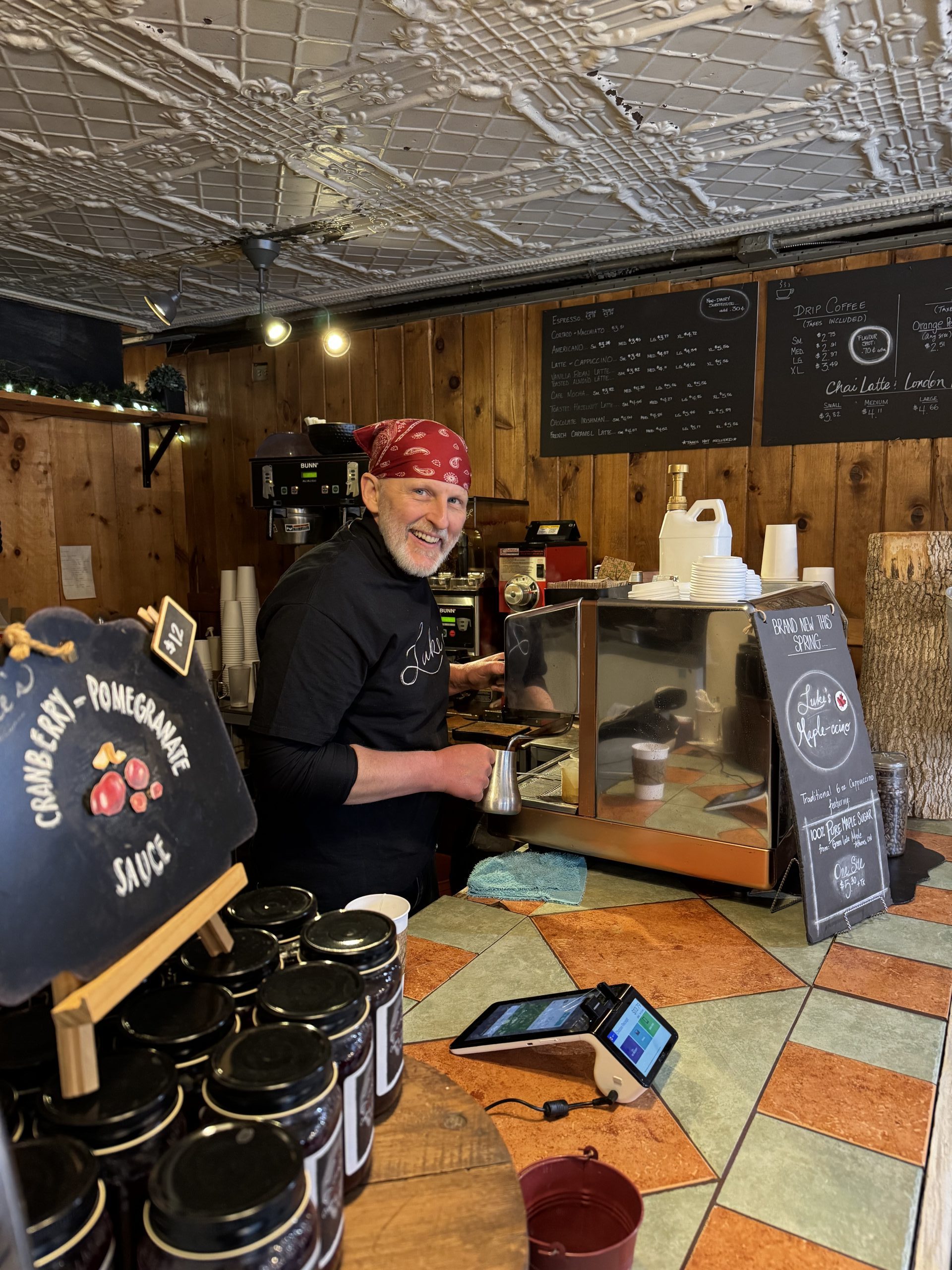
Luke’s European Style Market, Athens
Small communities create unusual proximity between visitors and producers.
The person greeting guests may also be the person who developed the recipe, planted the vines, tended the orchard or arrived before sunrise to begin baking. Producers frequently occupy several roles at once: farmer, maker, buyer, host, teacher and business owner.
At C’est Tout Bakery & Bistro in Smiths Falls, meeting owner Amy Rensby places the food within the larger story of the person and business behind it. In Merrickville, a mustard tasting at Mrs. McGarrigle’s can become a conversation about flavour, pairing and the evolution of a local product. The experience depends not only on what is placed in front of the visitor, but on who introduces it and what that person helps them notice.
This kind of access is difficult to communicate through a product label alone.
A tasting can reveal why one ingredient was chosen over another. A bakery counter can lead to a discussion about early mornings, changing demand or the limits of small-batch production. A farm visit can explain why the season unfolded differently this year than it did the year before.
The food becomes a way into the life of the place.
Rural food systems become visible along the way
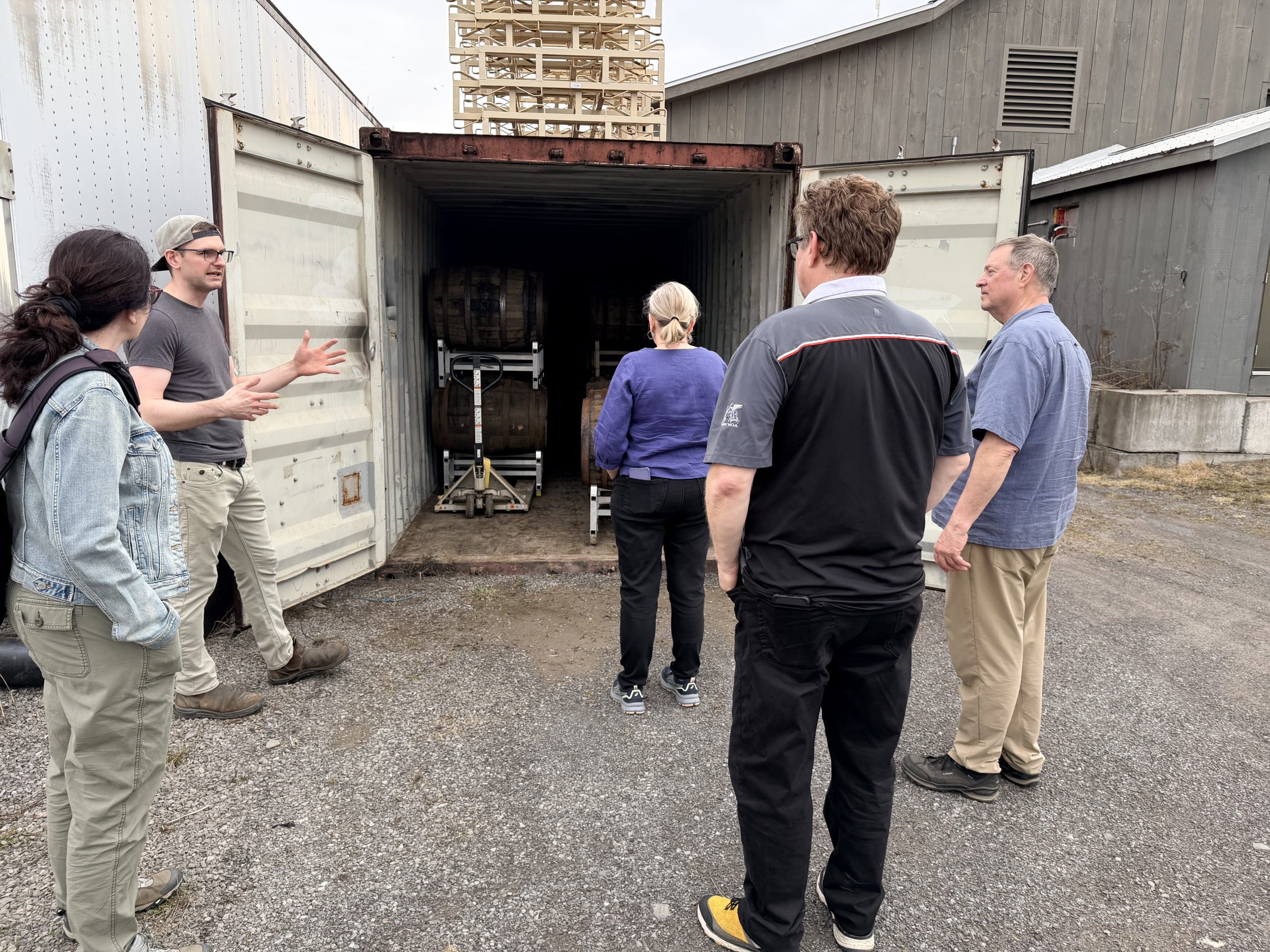
King’s Lock Craft Distillery, Johnstown
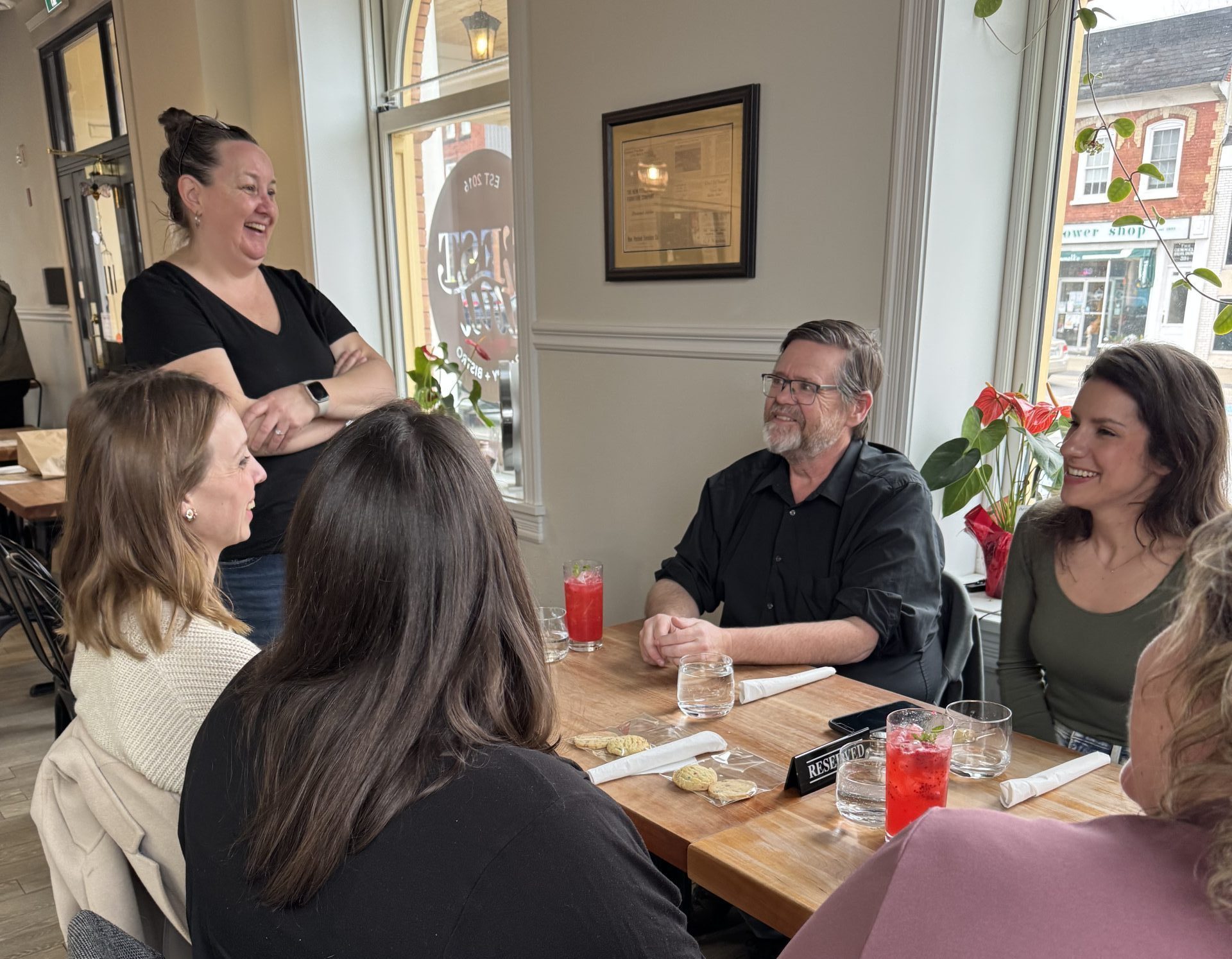
C’est Tout Bakery & Bistro, Smiths Falls
A meaningful food journey is rarely about one isolated stop. Its real power appears when several stops begin to reveal their relationship to one another.
At King’s Lock Craft Distillery near Johnstown, locally sourced certified-organic grain is distilled on site, while the remaining grain mash returns to farms for use as feed or fertilizer. The process connects farmers, production, waste reduction and the finished product in a cycle that is largely invisible when encountered only on a store shelf.
Elsewhere, a café may serve bread from a nearby bakery. A restaurant might alter its menu around what local growers have available. A farm shop can introduce products from several neighbouring businesses because relationships between producers often extend beyond their own properties.
Travel between these places matters too. The roads reveal the distances involved. Fields, waterways, villages and working farms provide the physical context that a single dining room cannot.
By the end of the day, the visitor has not simply accumulated a series of tastings. They have begun to see a regional food system.
Distance creates anticipation
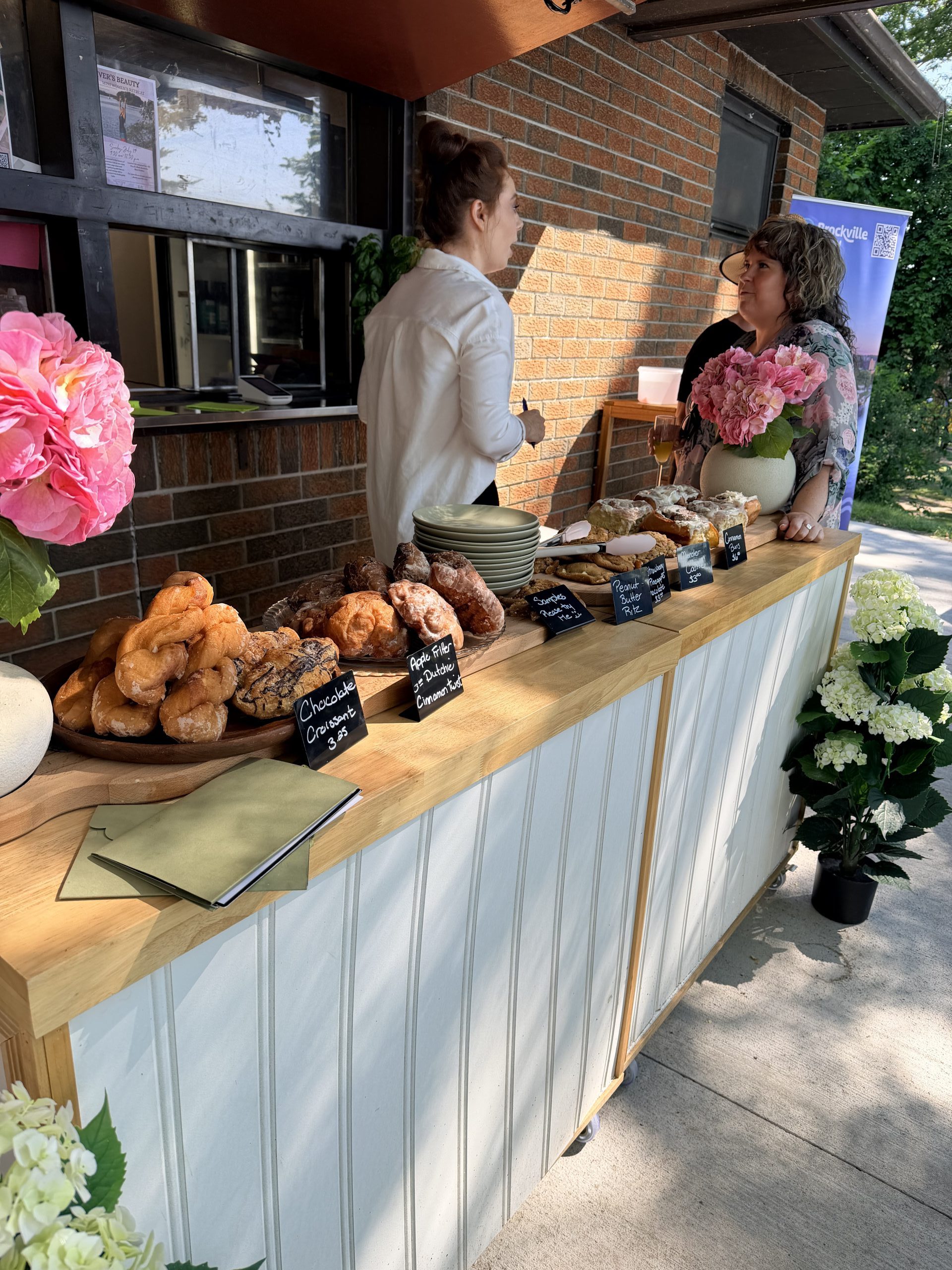
Anthophile Café, Brockville
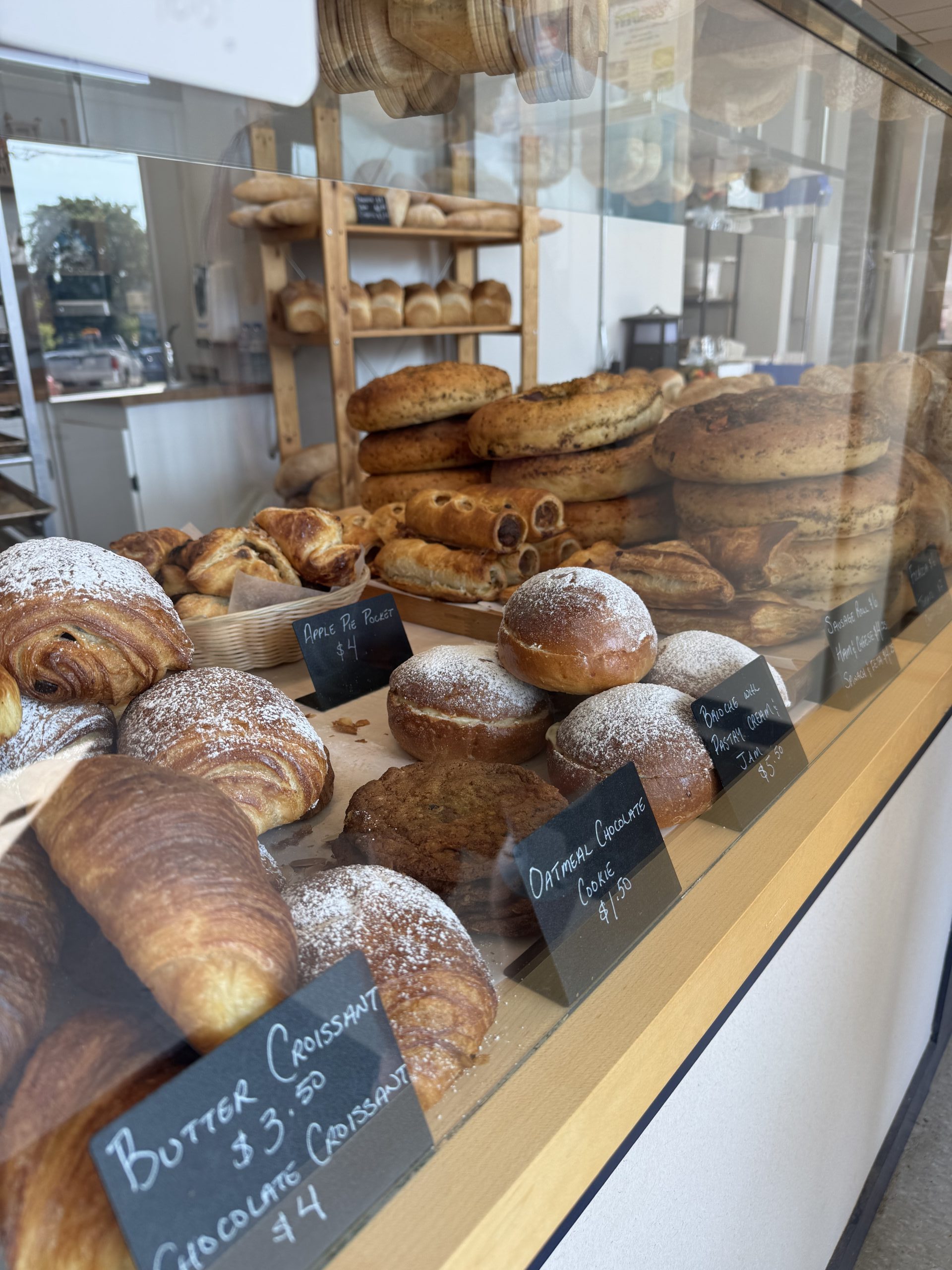
Big Waters Bakery, Athens
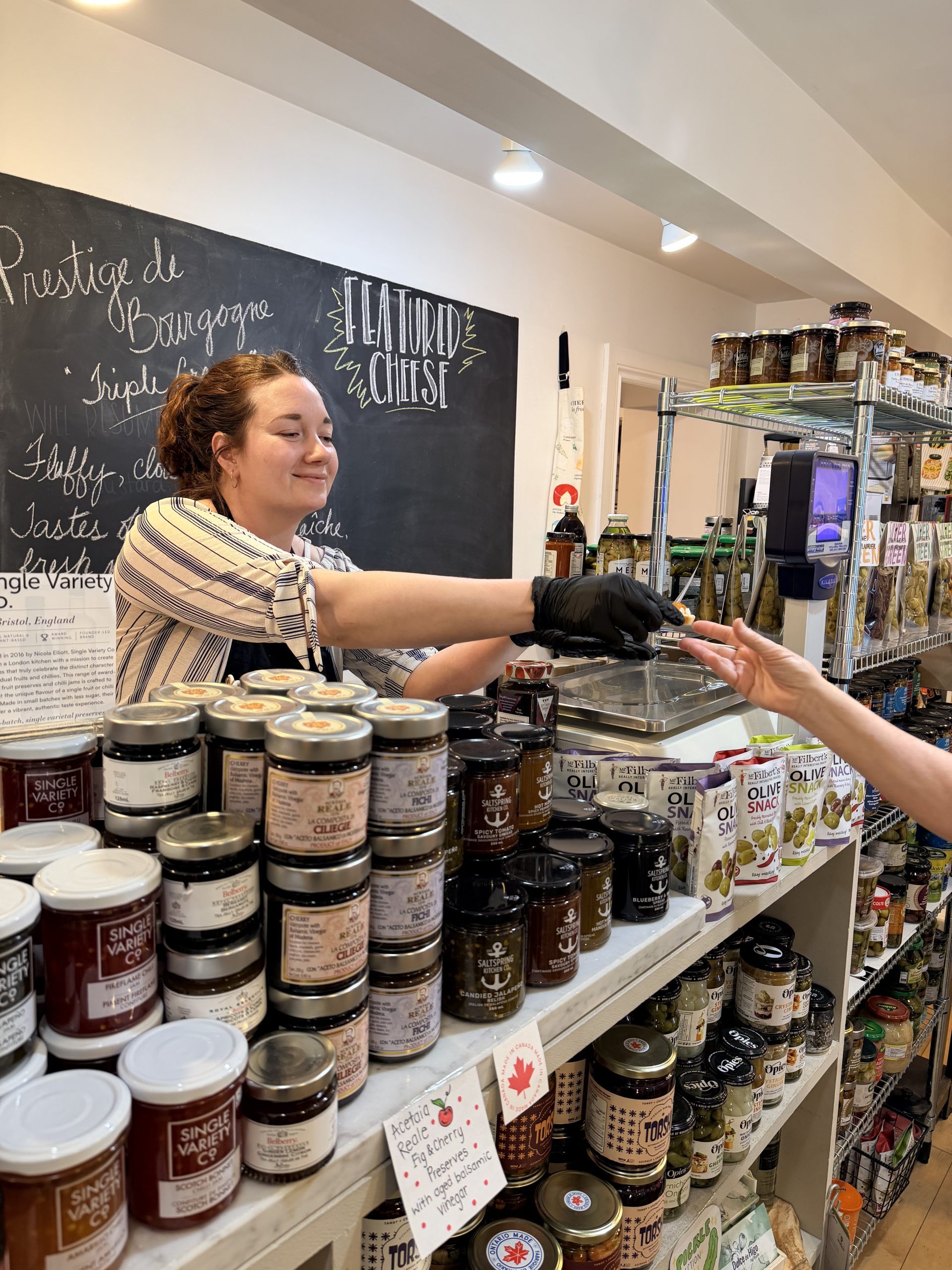
Mrs. McGarrigle’s, Merrickville
In a city, culinary abundance can be compressed into a few blocks. In the Riverlands, reaching the next stop may require following a county road, crossing a lock, passing through a village or travelling beyond the places most visitors already know.
That distance is sometimes treated as a disadvantage. It can be the opposite.
The road creates a pause between experiences. It allows one conversation to settle before the next begins. It reveals how communities relate to the landscape and to one another. It also makes finding a bakery in a small village, a vineyard above a lake or a market at the edge of an orchard feel like a genuine arrival.
The journey is not empty space between places to eat. It is part of the experience.
There is room for the experience to unfold
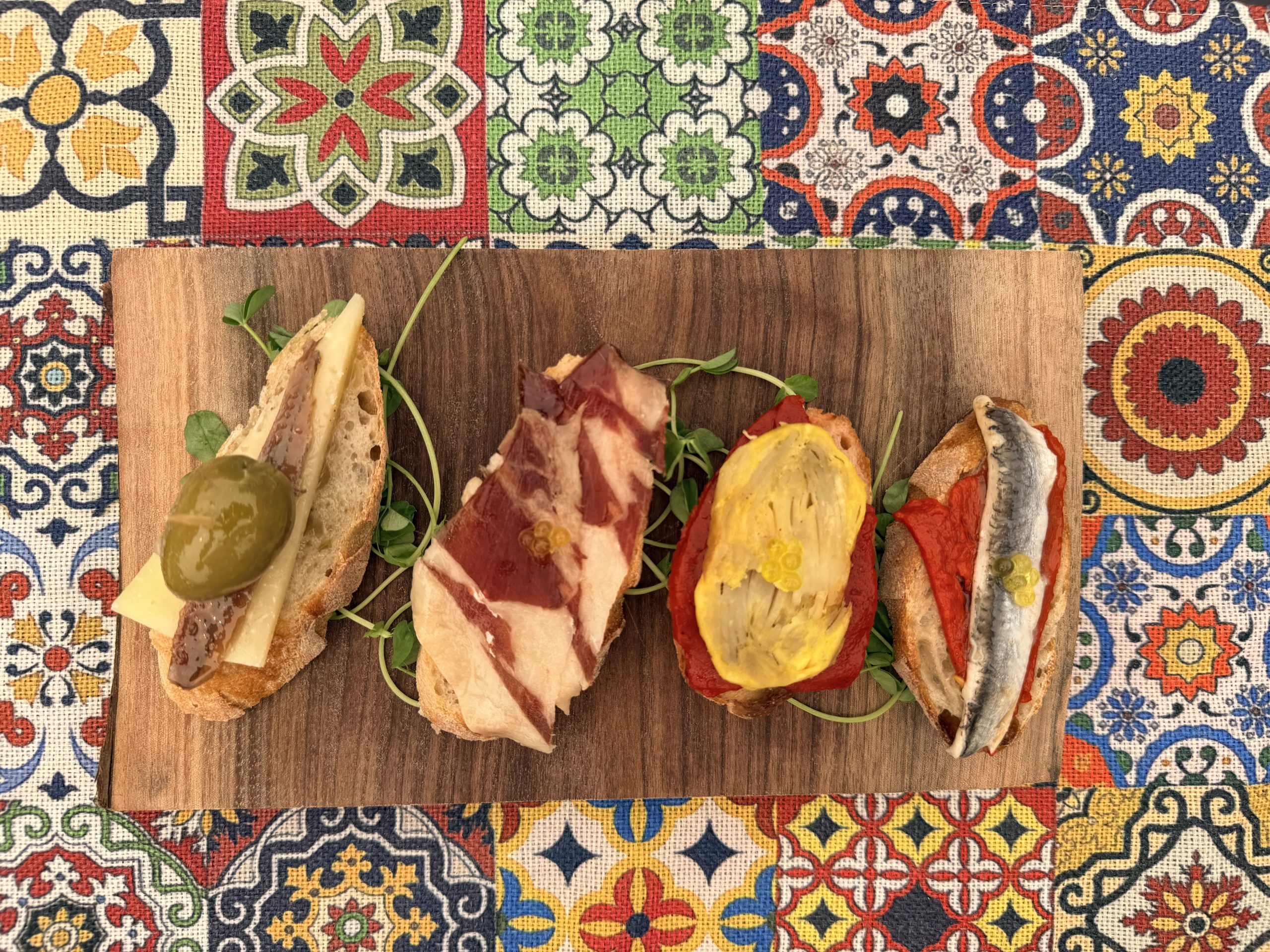
Little Barcelona, Prescott
Little Barcelona, Prescott
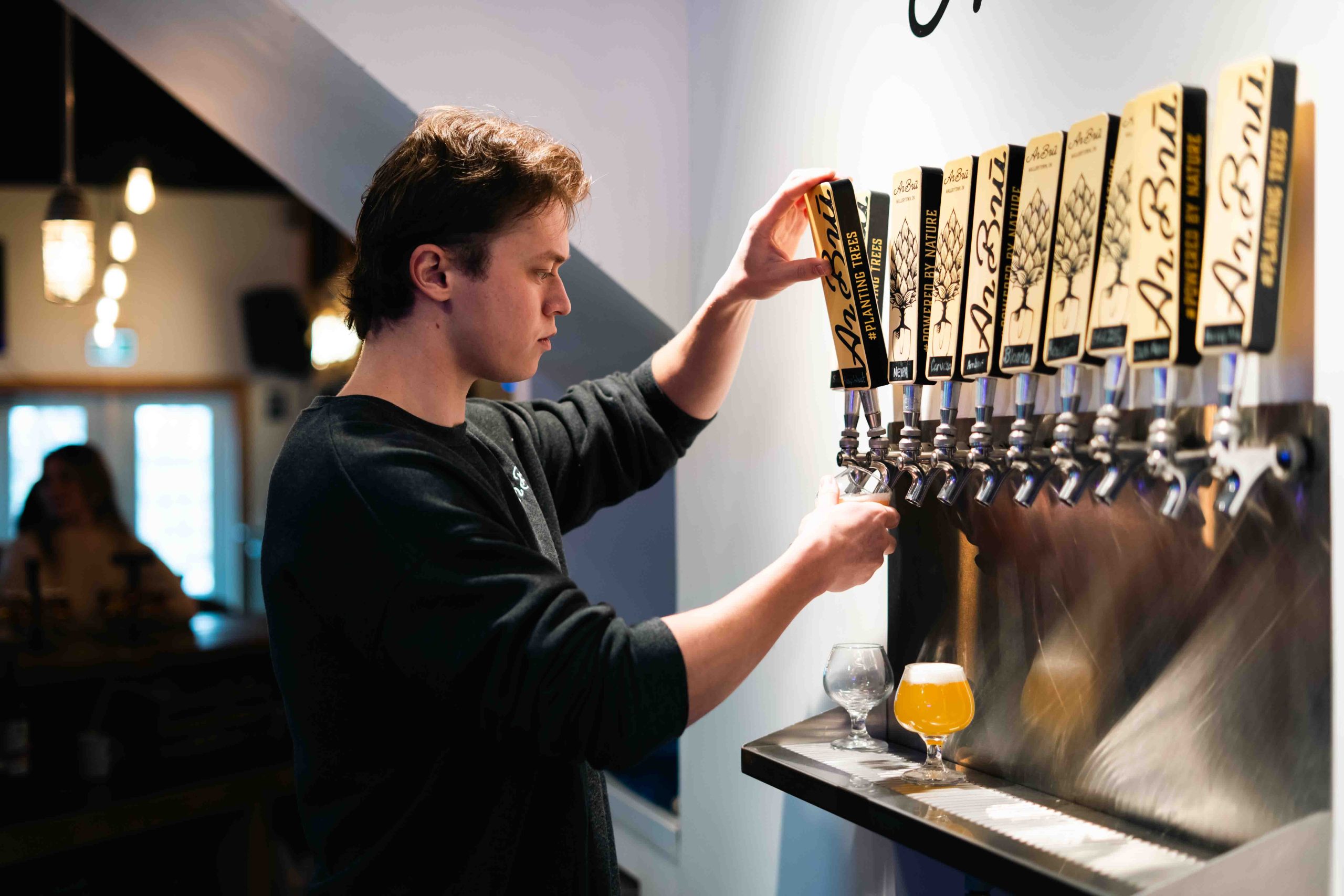
ArBru, Mallorytown
Good culinary travel requires time.
Time to ask a second question. Time to understand why a product tastes the way it does. Time for a producer to explain the decision, experiment or setback behind it. Time to notice the setting rather than photographing the plate and moving immediately to the next reservation.
Smaller communities can make room for those encounters, particularly when a journey is thoughtfully planned and visits are arranged with the people behind the businesses.
A tasting may lead into the production room. Lunch may stretch into a conversation about local suppliers. A visit intended to last twenty minutes may reveal the family history of a farm or the improbable sequence of decisions that created a vineyard.
These moments cannot be guaranteed by geography alone. Not every rural food experience is personal, just as not every urban one is anonymous. But outside major cities, the conditions often exist for a different kind of encounter: one in which production, place and personality remain closely connected.
More than somewhere to eat
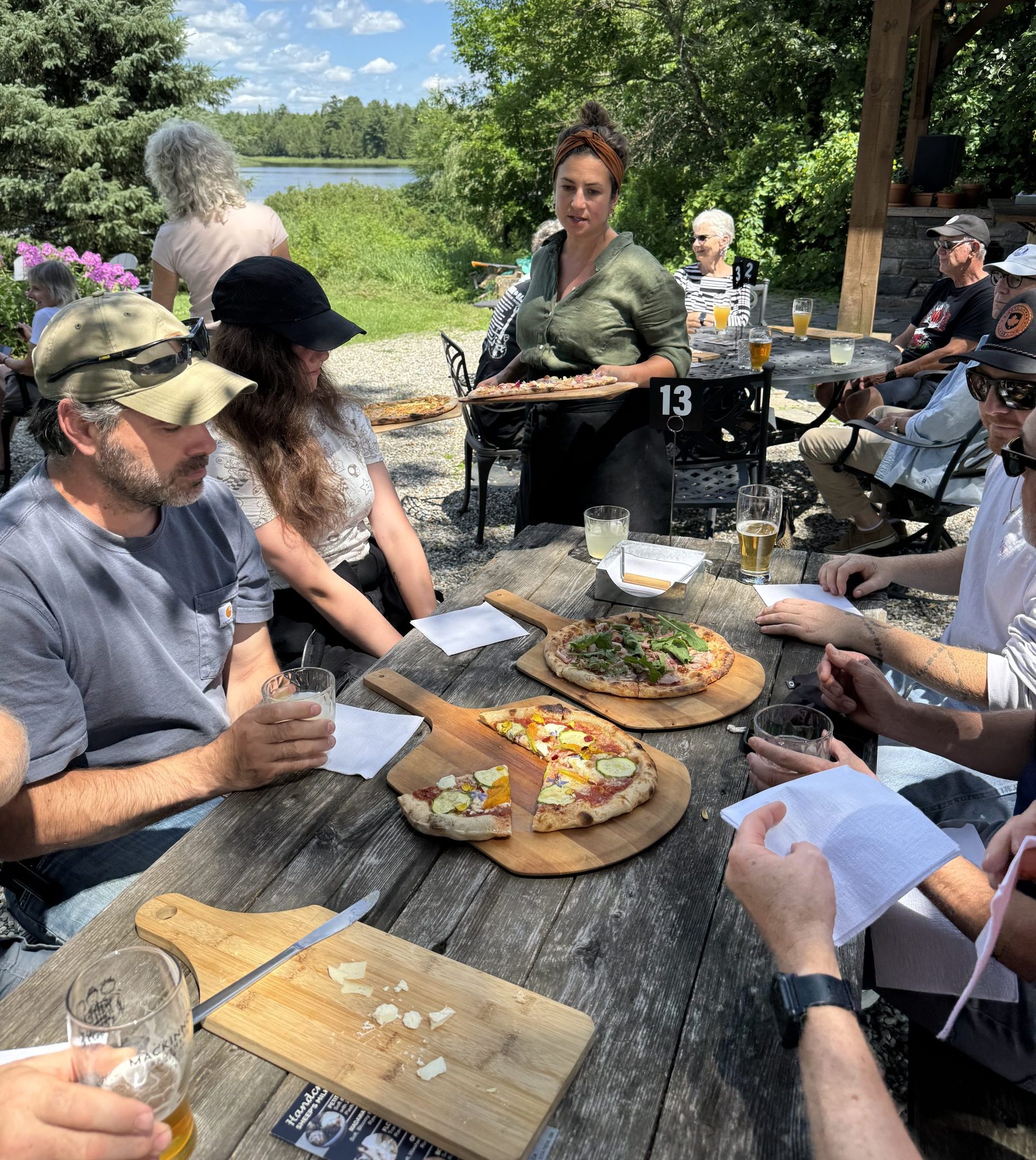
Back Forty Artisan Cheese, Mississippi Station
Back Forty Artisan Cheese, Mississippi Station
This is not an argument against cities. Urban restaurants bring together extraordinary talent, cultural traditions and ideas from around the world.
Rural culinary travel offers a different proposition.
It gives travellers the opportunity to follow food back toward its source. To understand what the landscape permits. To see how individual businesses depend upon farms, seasons, neighbouring makers and small communities. To meet people whose work carries the character of the region into what they grow, bake, preserve and serve.
For travellers willing to venture beyond the most familiar destinations, the reward is not simply a memorable meal.
It is a clearer understanding of where they are.
Many of the encounters photographed in this story took place during hosted culinary journeys with A 1000 Ways, a company creating private, story-led experiences across South Eastern Ontario.